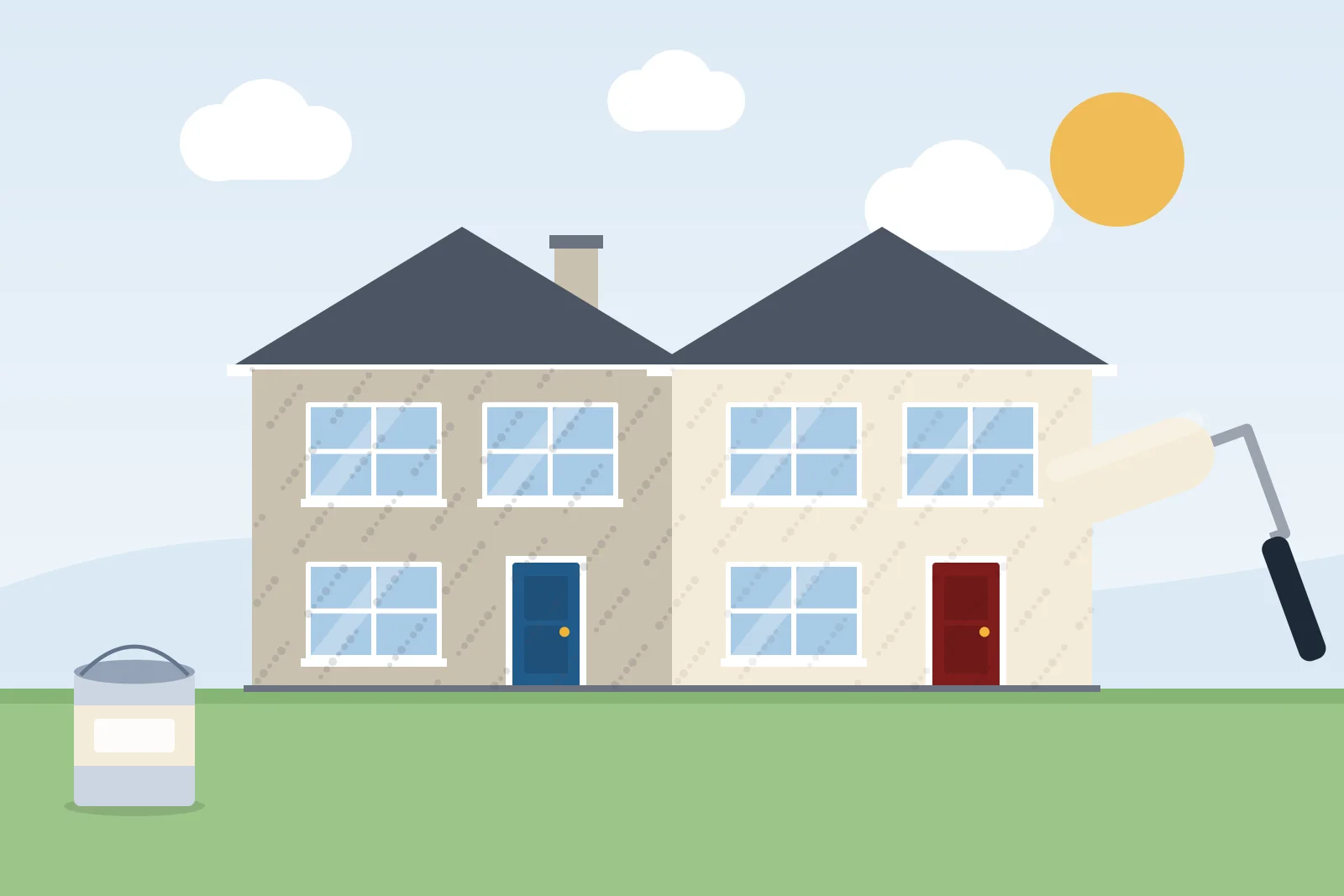
Pebble dash vs roughcast
Pebble dash (or dry dash) is a render with small stones thrown onto the wet surface so they stick and stay exposed. Roughcast or wet dash has the stones mixed into the final coat, giving a more uniform, lumpy texture. Both are common on 1920s–1960s houses across the UK and both can be painted.
The texture is what makes these finishes tricky. There's far more surface area than a smooth wall, lots of nooks for paint to fill, and stones can be loose. Painting pebble dash isn't a quick weekend job – but done properly, it gives a fresh, uniform look that lasts many years.
Check the render before you paint
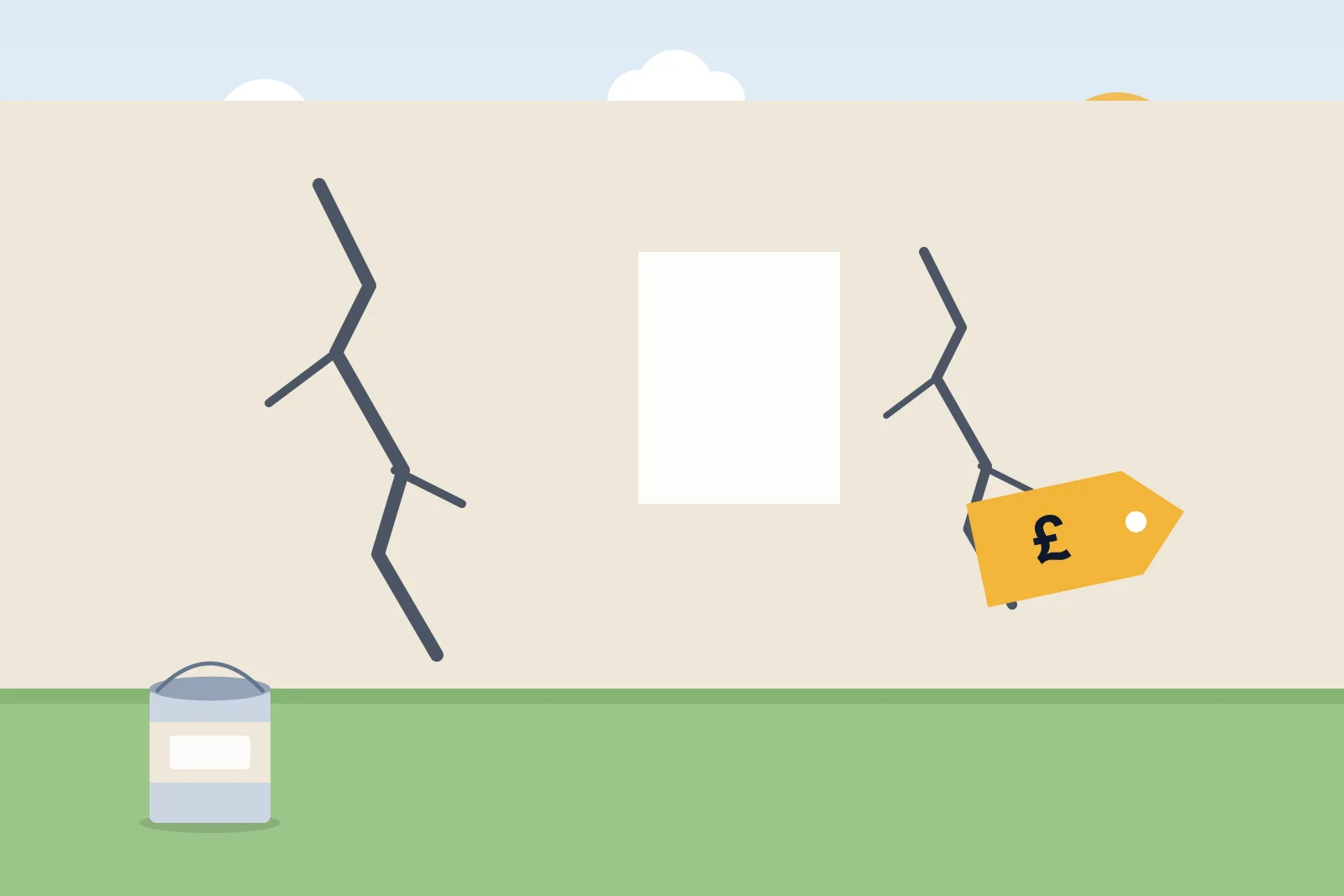
Paint won't fix failing render; it will only hide the problem for a while. Before anything else, tap the walls with the handle of a screwdriver or a small hammer. A hollow sound means the render has come away from the wall. Look for cracks, bulges, missing stones, and staining that suggests water is getting in.
Small cracks and patches can be repaired with a matching dash or a textured filler. Larger hollow areas need hacking off and re-rendering by a plasterer before painting. If more than a quarter of the wall is hollow, re-rendering the whole elevation may be better value. See repairing and painting cracked render.
The right preparation
- Brush off loose stones and dirt with a stiff brush
- Treat algae, lichen and mould with a fungicidal wash and leave it to work
- Gently clean – pressure washing can blast stones loose, so it must be done carefully or not at all
- Repair cracks and patches and let repairs cure
- Apply a stabilising solution to chalky or powdery surfaces so paint can bond
- Mask windows, doors, sills and paths – pebble dash spatter travels
Which paint to use
Use a good-quality exterior masonry paint. Smooth masonry paint works on pebble dash, but many painters prefer a fine-textured masonry paint or a flexible coating that bridges hairline cracks. On older houses with lime-based render, a breathable mineral or silicate paint is a better choice than a plastic-like acrylic, which can trap moisture. See the masonry paint guide and breathable paints for old homes.
Expect to use around twice as much paint as on smooth render. As a rule of thumb, coverage drops from around 10–15m² per litre on smooth walls to 4–6m² per litre on pebble dash.
Rather leave it to a professional?
Brush, roller or spray?
A long-pile masonry roller (around 30mm) is the standard tool, with a masonry brush for edges and around stones the roller misses. Painters often 'stipple' the first coat to work it into all the gaps. Airless spraying is much faster on large areas and gets into the texture well, but needs thorough masking and calm weather. Many pros spray and then back-roll to make sure every gap is filled. Compare the methods in spray painting vs brush and roller.
What painting pebble dash costs
Repairs to hollow or cracked areas are extra and usually priced per patch or per m². See do you need scaffolding to paint a house for access options.
| House | Typical cost |
|---|---|
| Front of a terraced house | £700 – £1,400 |
| Three-bedroom semi, all elevations | £2,000 – £3,800 |
| Detached house, all elevations | £3,000 – £5,500 |
| Per m² (prep and two coats) | £12 – £25 |
| Scaffolding (if needed) | £600 – £1,800 |
Indicative prices for painting a pebble-dashed house (2026, two coats, including prep)
Choosing a colour
Soft whites, creams and pale stone shades are the safe choices on pebble dash – they disguise the texture's shadows and suit most streets. Darker shades show every patch and tend to fade unevenly. If you're in a terrace, look at the neighbours: a colour that sits well with the row usually looks better and helps with resale. Get a tester pot and paint a square metre on two elevations before committing.
When you're ready, get quotes from exterior painters and ask each one how they'll deal with loose stones and hollow areas.