The short answer
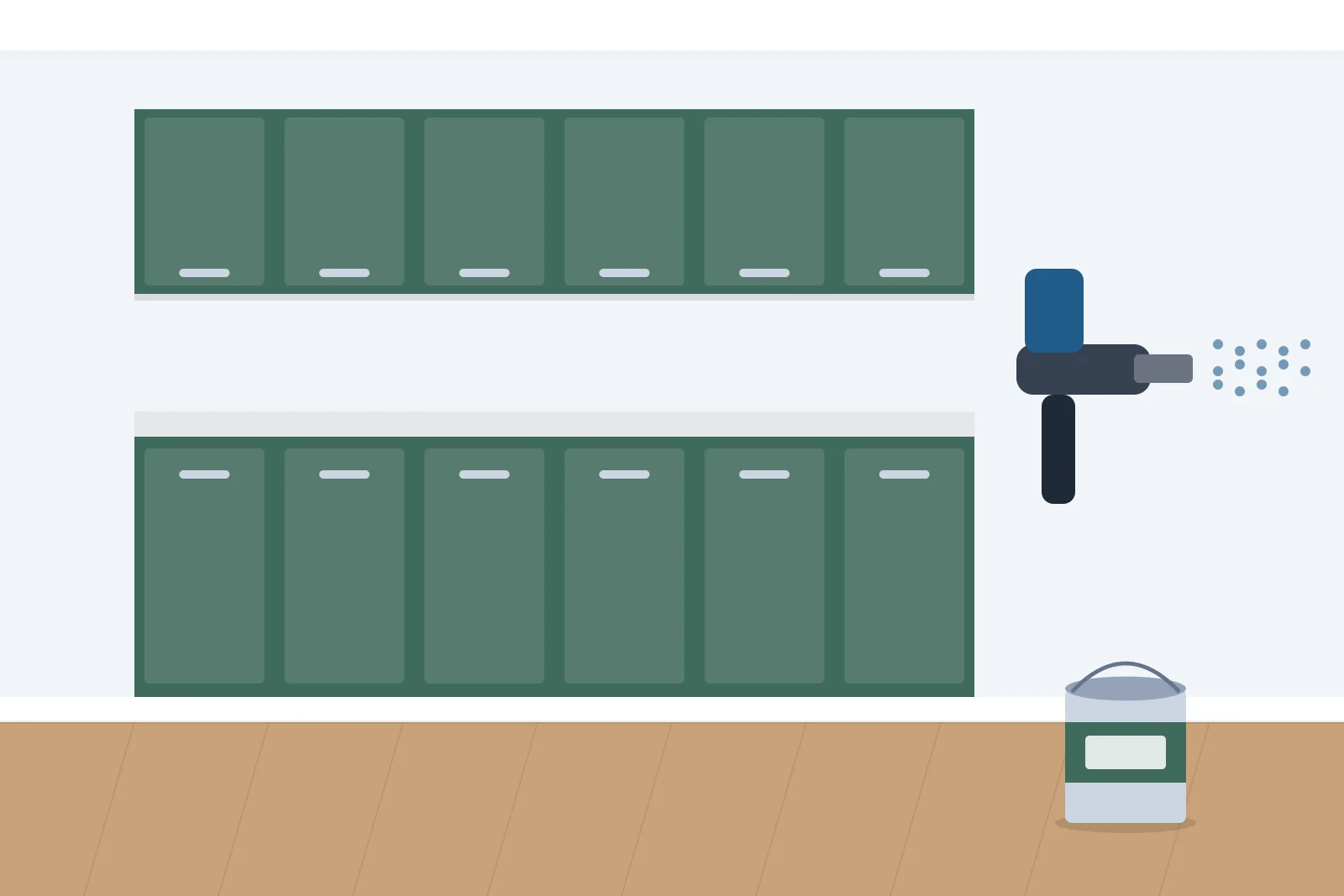
Spraying is faster on large, empty, open areas – new builds, exterior render, large commercial spaces, kitchen cabinets and uPVC. Brush and roller is usually better in occupied homes, smaller rooms and jobs with lots of cutting in, because it needs far less masking and preparation.
In practice, many decorators combine both: rolling walls, spraying ceilings in an empty room, or spraying woodwork in a workshop.
| Spraying | Brush and roller | |
|---|---|---|
| Speed of application | Very fast | Slower |
| Masking and prep time | High | Low |
| Finish | Very smooth, uniform | Slight texture from roller |
| Paint use | Higher (overspray) | Lower |
| Best for | Large, empty spaces, cabinets, exteriors | Occupied homes, smaller rooms |
| Clean-up | More involved | Simple |
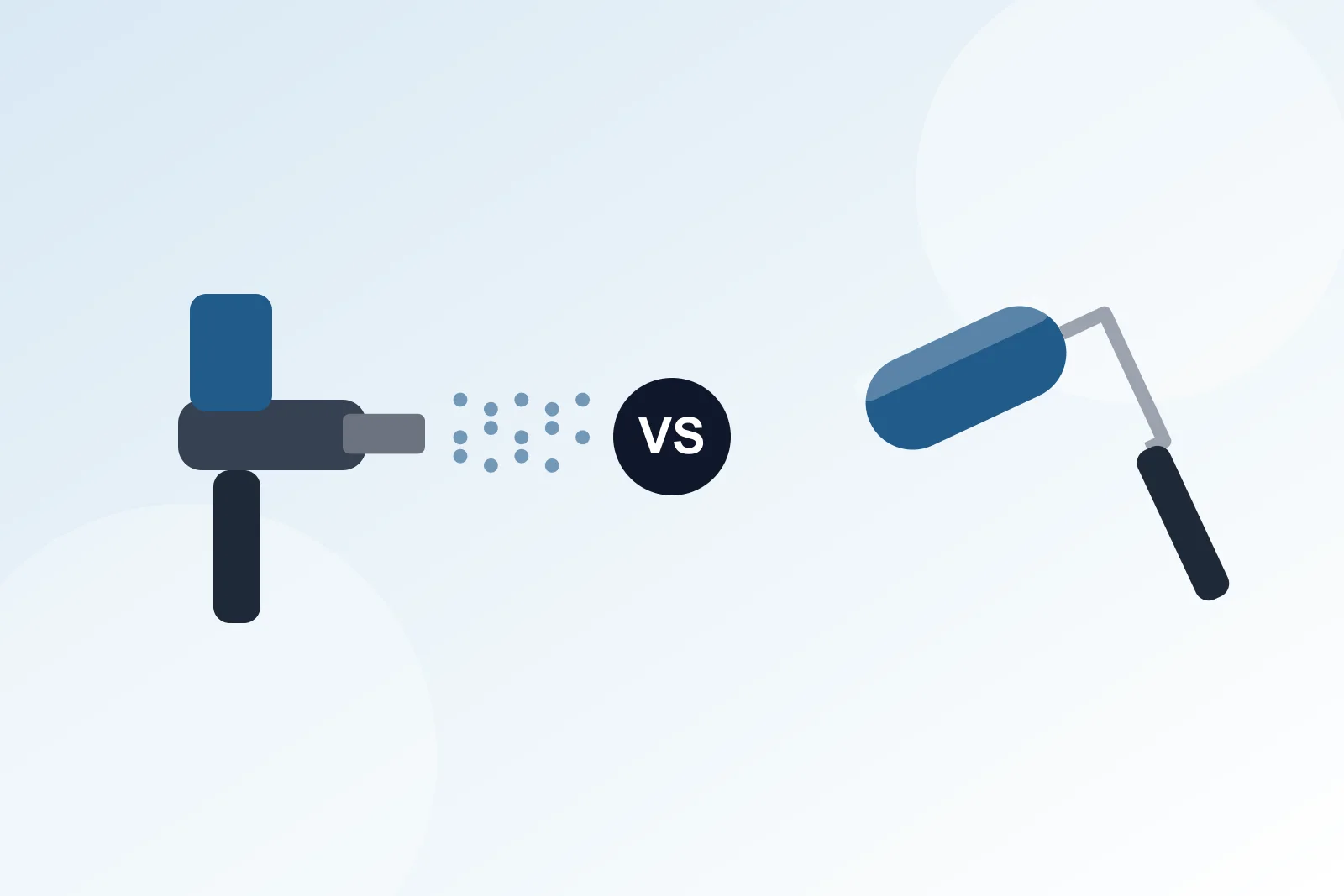
Spraying vs brush and roller at a glance
Advantages of spraying
An airless sprayer can apply paint several times faster than a roller, and the finish is smooth and even, with no roller texture or lap marks. On rough surfaces like pebble-dash or rough-sawn timber, it gets paint into every gap. For kitchen cabinets and uPVC, spraying gives a factory-like finish that's hard to achieve with a brush.
Disadvantages of spraying
Everything that isn't being painted has to be covered – floors, windows, furniture, sockets, light fittings and often the rest of the room. That masking time can wipe out the speed advantage in a small or furnished room. Sprayers also use more paint because of overspray, and outside, wind can carry paint onto cars, plants and neighbours' property.
- Extensive masking and protection
- More paint wasted through overspray
- Not suitable in windy weather outside
- Equipment set-up and cleaning time
- Fumes and mist need ventilation and protection
Rather leave it to a professional?
Advantages of brush and roller
Brush and roller is simple, controlled and needs much less masking. It's ideal for occupied homes, where the decorator is working around furniture and family life. Rolling also pushes paint into the surface well, which helps adhesion on porous walls. The slight texture a good roller leaves is barely noticeable – and many people prefer it.
Cost differences
Spraying doesn't always make a job cheaper. The labour saved on application is partly offset by masking time and paint wastage. On a large new build or a big exterior wall, spraying can save considerable time and money. On a single bedroom, the difference is negligible.
For specialist work such as kitchen cabinets or uPVC windows and doors, spraying is often worth paying for.
Which should you choose?
In most cases, let your decorator recommend the method based on the job. What matters most is good preparation and a quality finish. Get quotes from local painters and decorators, and ask each how they'd approach your project.