External Painting Quotes
Flaking masonry paint, tired window frames or a front that simply needs freshening up – compare quotes from painters who do exterior work in your area.
- Masonry and render
- Pebble-dash and roughcast
- Windows, doors and sills
- Fascias, soffits and gutters
- Garden walls and fences
- Scaffolding and access arranged
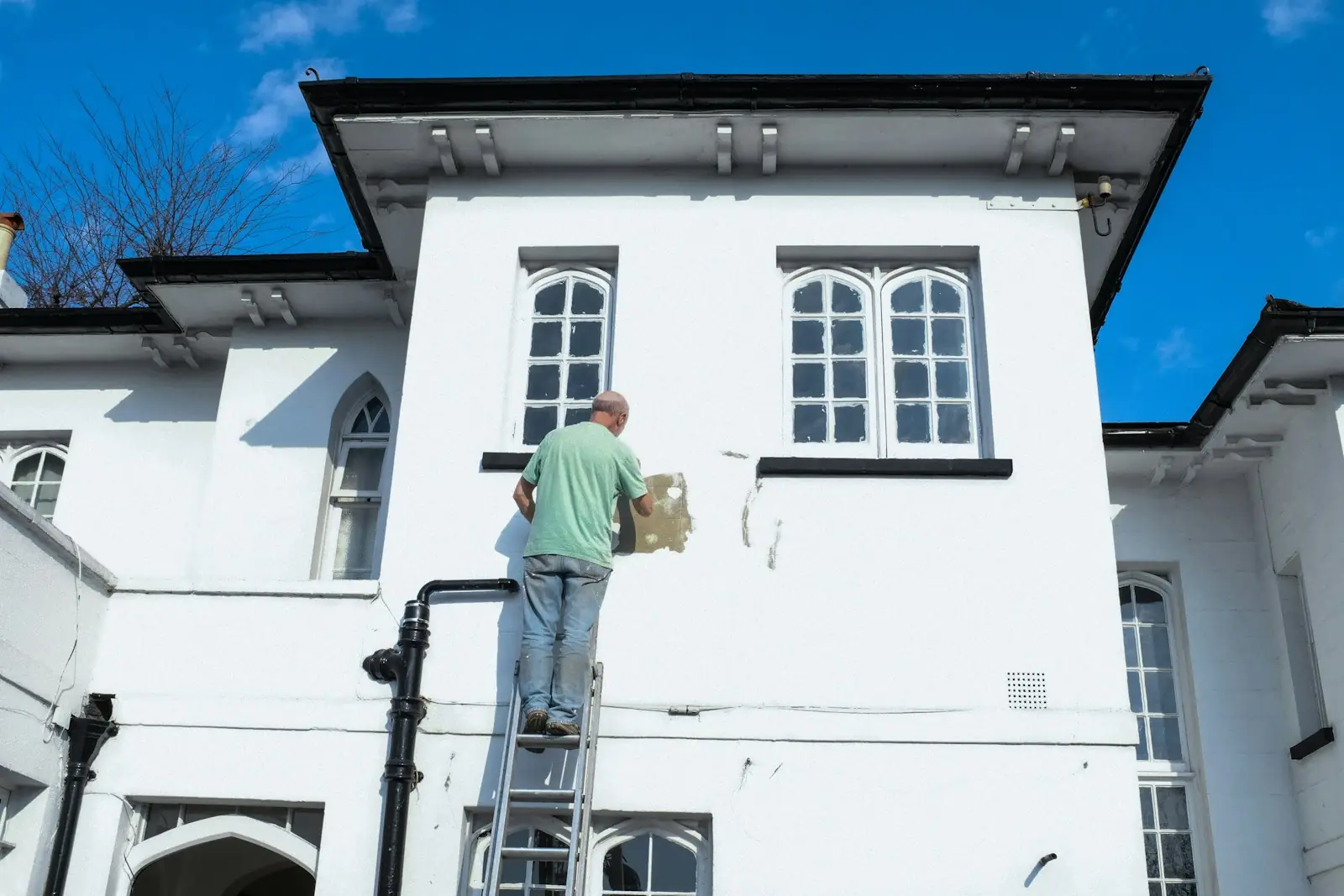
The outside of a house takes a battering from the British weather. Rain, frost, wind and summer sun gradually break down paint, and once it starts to crack and flake, water gets into render and timber and the damage speeds up. A well-timed repaint protects the building as well as improving how it looks from the street.
Exterior painting is a different job from decorating indoors. It depends on dry weather, it often involves scaffolding or towers, and the preparation – washing, scraping, repairing render, treating bare timber – decides how long the new finish lasts.
Tell us what needs painting and roughly how big the house is, and local painters who take on exterior work can come back to you with prices. Photos of each side of the house are especially helpful.
Exterior painting jobs local painters quote for
Whole-house exterior painting
Masonry, windows, doors, fascias and soffits done together – usually the best value, as access only has to be set up once.
Masonry and render
Smooth and textured render, painted brick and block, with repairs to cracks and loose patches before painting.
Pebble-dash and roughcast
Textured finishes need more paint and more effort to coat evenly, so they're usually priced accordingly.
Windows, doors and frames
Sash and casement windows, sills, front doors and garage doors – sanded, repaired, primed and finished.
Fascias, soffits and gutters
Timber fascias and bargeboards, plus cast iron or older gutters and downpipes that need protecting.
Garden walls, fences and outbuildings
Masonry paint on garden walls, and stains or paints for fences, sheds, summerhouses and gates.
Exterior walls and masonry painting
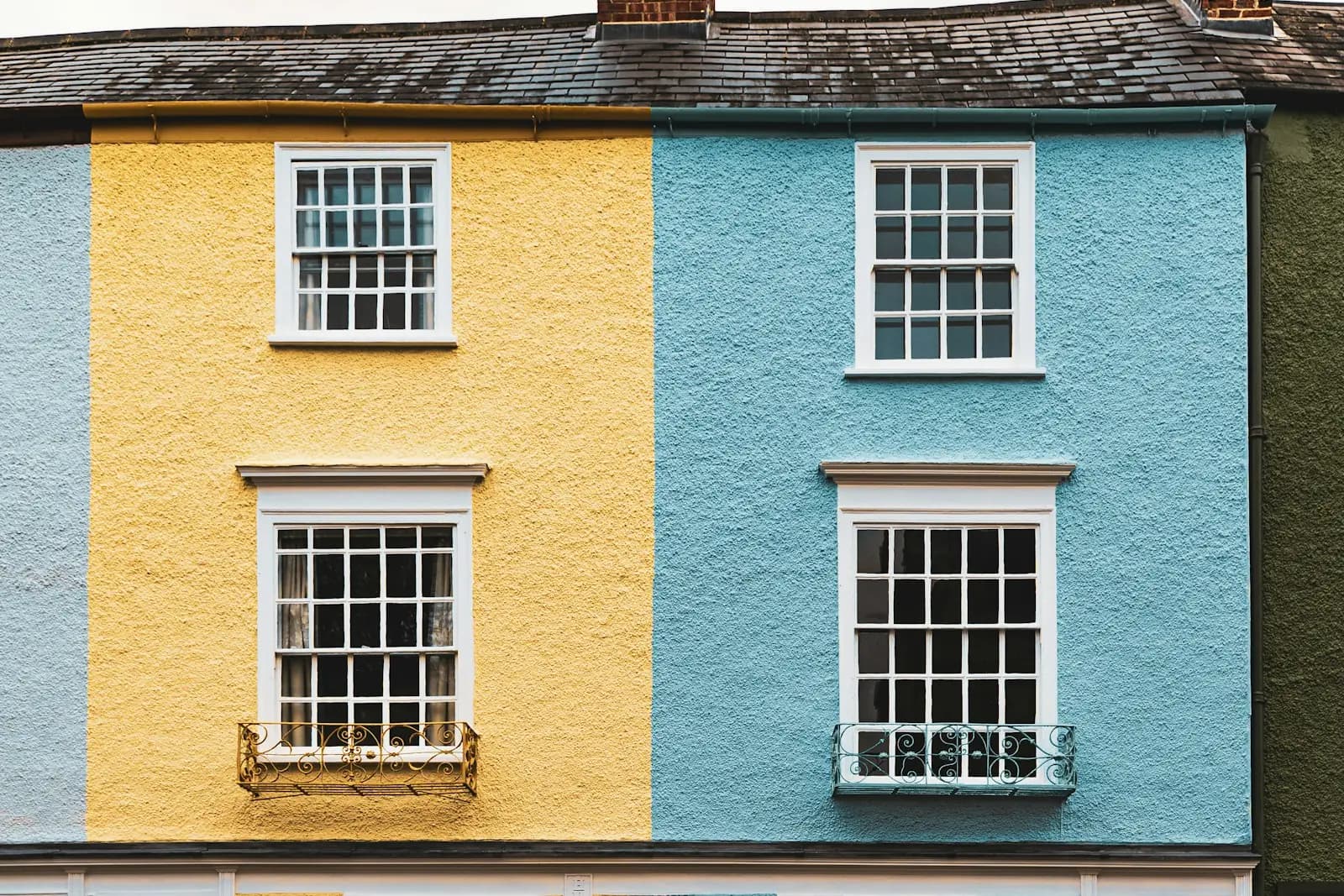
Most painted house walls in the UK are render, pebble-dash or roughcast, or brick that was painted at some point in the past. They are usually finished in masonry paint, which comes in smooth and textured versions and is designed to let the wall breathe while keeping driving rain out.
Unpainted brick and natural stone are usually best left alone. Painting them can trap moisture and, once a wall is painted, you are committed to repainting it in future. Older homes with lime render or lime mortar may need breathable mineral or limewash finishes rather than standard masonry paint – a painter with experience of period properties will advise.
Preparation for a finish that lasts
Exterior paint fails early when it goes onto dirty, chalky, damp or unsound surfaces. A thorough painter will spend a good part of the job on preparation before any colour goes on:
- Washing down walls and treating algae, lichen or mould with a fungicidal wash
- Scraping off loose and flaking paint, back to a sound edge
- Raking out and filling cracks, and repairing hollow or blown render
- Applying a stabilising solution to chalky or powdery surfaces
- Cutting out or resin-repairing rotten timber on sills and frames
- Sanding, knotting and priming bare wood
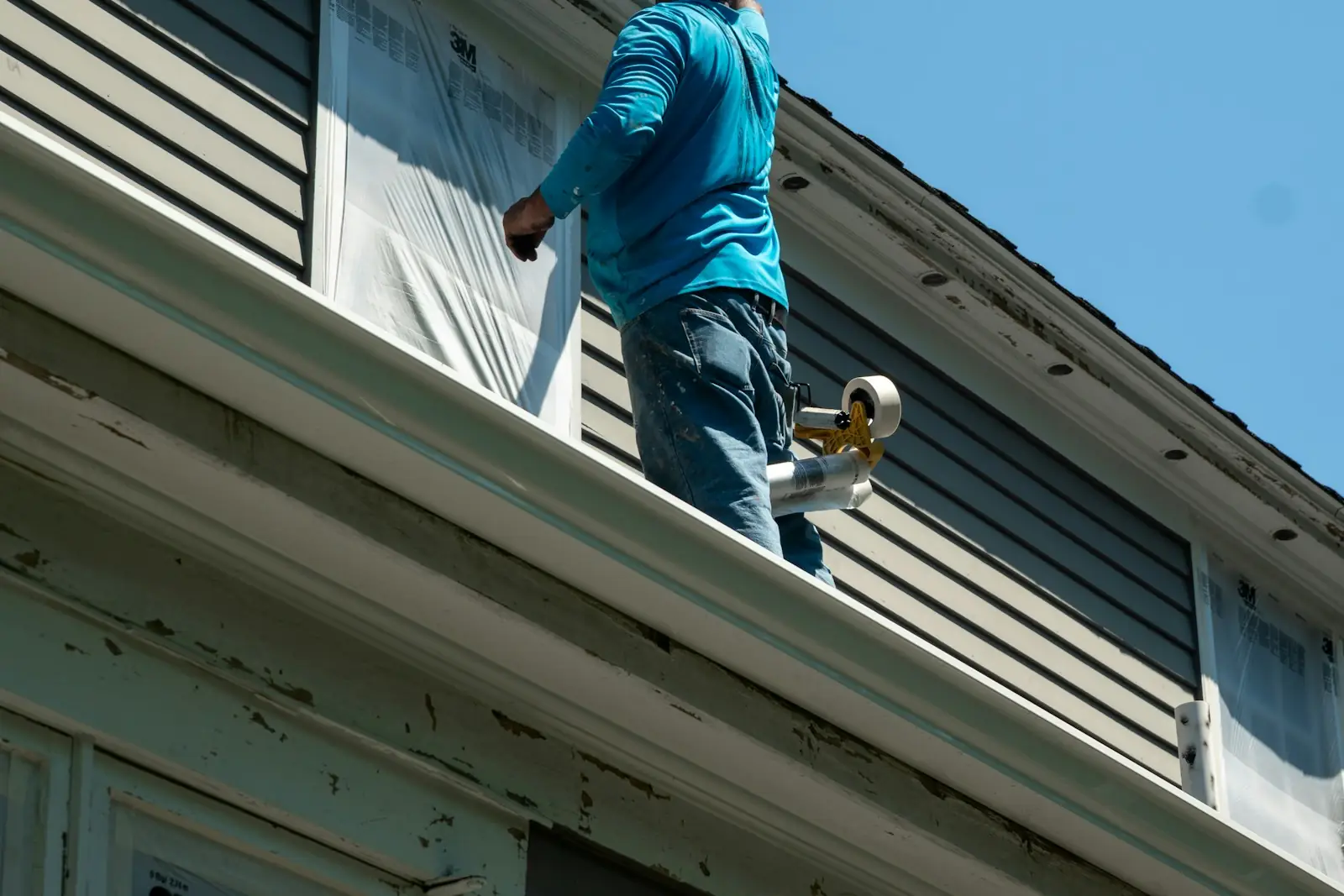
- Masking glazing and protecting paths, plants and neighbouring property
Weather and the painting season
Exterior paint needs dry surfaces, temperatures above the minimum on the tin (often around 5°C, and rising through the drying time) and no rain until it has dried. Morning dew and evening frost can spoil a finish just as easily as a shower, and very hot sun on a dark surface can make paint dry too fast.
In practice that means most exterior work in the UK is done between late spring and early autumn. Good exterior painters book up early for those months, so it pays to request quotes in winter or early spring. Expect some flexibility on dates: a responsible painter will move the job rather than paint in the wrong conditions.
Ladders, towers and scaffolding
Bungalows and ground-floor work can often be done from ladders and steps. For a two-storey house, a tower or scaffolding is usually safer and quicker, and it lets the painter do proper preparation rather than stretching from a ladder. Some painters own their own access equipment; others subcontract scaffolding and add it to the quote.
If scaffolding has to go on the pavement, the scaffolder normally needs a licence from the council. On terraces you may also need a neighbour's agreement to put up access or work from their side. Make sure each quote says who is arranging access and whether its cost is included.
Fences, garden walls and outbuildings
Many exterior painters also paint or stain garden fences, gates, sheds and summerhouses, and paint rendered garden walls to match the house. It's usually cheaper to add these to a wider exterior job than to book them on their own.
New pressure-treated timber is often left to weather for a while before it's stained or painted – check the manufacturer's guidance. Spraying is quick on long fence runs, but overspray can drift onto cars, plants and neighbours' property, so ask how the painter will control it.
Repainting and maintenance
How often a house needs repainting depends on exposure, the surface and the quality of the last job. Woodwork – especially south-facing sills and doors and anything near the coast – usually needs attention sooner than masonry. Signs that it's time include flaking or cracking paint, chalky residue that rubs off on your hand, bare timber showing through and green staining on walls.
Small, regular touch-ups to windows and doors are far cheaper than replacing rotten timber later. Some homeowners ask their painter to come back every few years just to check and touch up the most exposed areas.
Planning your exterior painting
Request quotes early – ideally in winter or early spring – for work in the main painting season. Painters can usually visit or price from photos in any weather, even if the work itself has to wait for drier days.
If other outside work is planned, such as roofing, guttering, new windows or render repairs, get that done first. It is worth fixing leaking gutters and downpipes before painting, as they will quickly stain a fresh finish.
Permissions and safety
- Repainting a house in its existing colour rarely needs permission. In some conservation areas, an Article 4 direction can mean you need planning permission to paint the front of a house or change its colour – check with your council.
- Listed buildings may need listed building consent for changes to their external appearance, including a change of colour or paint type.
- Older windows and doors may have lead paint. It should not be dry sanded or burnt off without the right precautions.
- Scaffolding on the pavement or road usually needs a council licence, which the scaffolding firm normally applies for.
Typical exterior painting prices
Indicative UK prices for labour and materials. Scaffolding is shown separately because it varies so much between houses. Your quotes will depend on the height and size of the house, the surfaces and how much preparation is needed.
| Job | Typical UK price |
|---|---|
| Exterior painter's day rate | £200–£320 per day |
| Front elevation of a terraced house (masonry and woodwork) | £800–£1,800 |
| Three-bedroom semi, masonry and woodwork | £1,800–£4,000 |
| Detached house, masonry and woodwork | £3,000–£6,500 |
| Fascias, soffits and gutters only (average semi) | £400–£900 |
| Front door, prepared and repainted | £150–£350 |
| Painting or staining an average garden fence | £200–£600 |
| Scaffolding for a two-storey semi (if needed) | £800–£2,000 |
Prices are indicative only and include VAT where the painter is VAT-registered. Always get written quotes for your specific job.
More examples, including day rates and whole-house prices, are in our painter and decorator cost guide.
What affects the price
- Height and access
- Two- and three-storey houses, steep gardens and narrow access all add time and may need towers or scaffolding.
- Surface type
- Pebble-dash and roughcast use more paint and take longer than smooth render.
- Condition and repairs
- Cracked render, flaking paint and rotten timber need repairs before painting.
- How much is included
- Masonry only, woodwork only or the whole house – and how many elevations.
- Exposure
- Coastal and exposed homes may need tougher paint systems and more thorough preparation.
- Time of year
- Painters are busiest from late spring to early autumn, so booking early helps.
Comparing exterior painting quotes
- Which elevations and surfaces are included – walls, windows, doors, fascias, gutters
- What preparation and repairs are allowed for, and how extra repairs will be priced
- The paint system: primer, undercoat and finish, and the brand
- Who arranges and pays for access equipment or scaffolding
- How plants, paths, cars and neighbouring property will be protected
- What happens if the weather delays the job
- Public liability insurance, including working at height
- Any guarantee on the workmanship and what it covers
Request exterior painting quotes
Describe the job, add your postcode and compare quotes from local painters and decorators. It's free, and you're under no obligation to go ahead.
Get free exterior painting quotes
Describe your painting or decorating job once and compare quotes from local painters who cover your area.
- Free to use
- No obligation
- Compare local painters
- Quick online form
You'll continue to our quotes partner, MyJobQuote, to describe your painting job.
External Painting near you
You can request exterior painting quotes anywhere in the UK. These cities have their own local exterior painting guide:
Painters and decorators in more towns and cities
External Painting: frequently asked questions
When is the best time to paint the outside of a house?
Usually from late spring to early autumn, on dry days when temperatures stay above the minimum stated on the paint and there's no rain, frost or heavy dew while it dries. Painters can quote at any time of year.
How long does exterior paint last?
It varies with the surface, the paint and how exposed the house is. Masonry paint on well-prepared render usually lasts longer than gloss on south-facing woodwork, which may need attention after a few years. Coastal homes generally need repainting more often.
Can pebble-dash be painted?
Yes. Pebble-dash and roughcast are commonly painted with masonry paint. They take more paint and more time than smooth render, and loose or hollow areas should be repaired first.
Should I paint brick or stone walls?
Usually not, unless they have already been painted. Painting unpainted brick or stone can trap moisture and commits you to repainting in future. Ask a painter or surveyor for advice on older and listed buildings.
Do I need scaffolding to paint my house?
Not always. Bungalows and lower areas can often be done from ladders, but two-storey houses are usually safer and quicker with a tower or scaffolding. Your quotes should say what access is planned and whether it's included.
Do I need permission to paint the outside of my house?
Normally not. Exceptions include listed buildings and some conservation areas covered by an Article 4 direction, where painting the front or changing its colour can need consent. Check with your local council if in doubt.
Ready to get exterior painting quotes?
One short form, local painters and decorators, no obligation.
Get Free Quotes