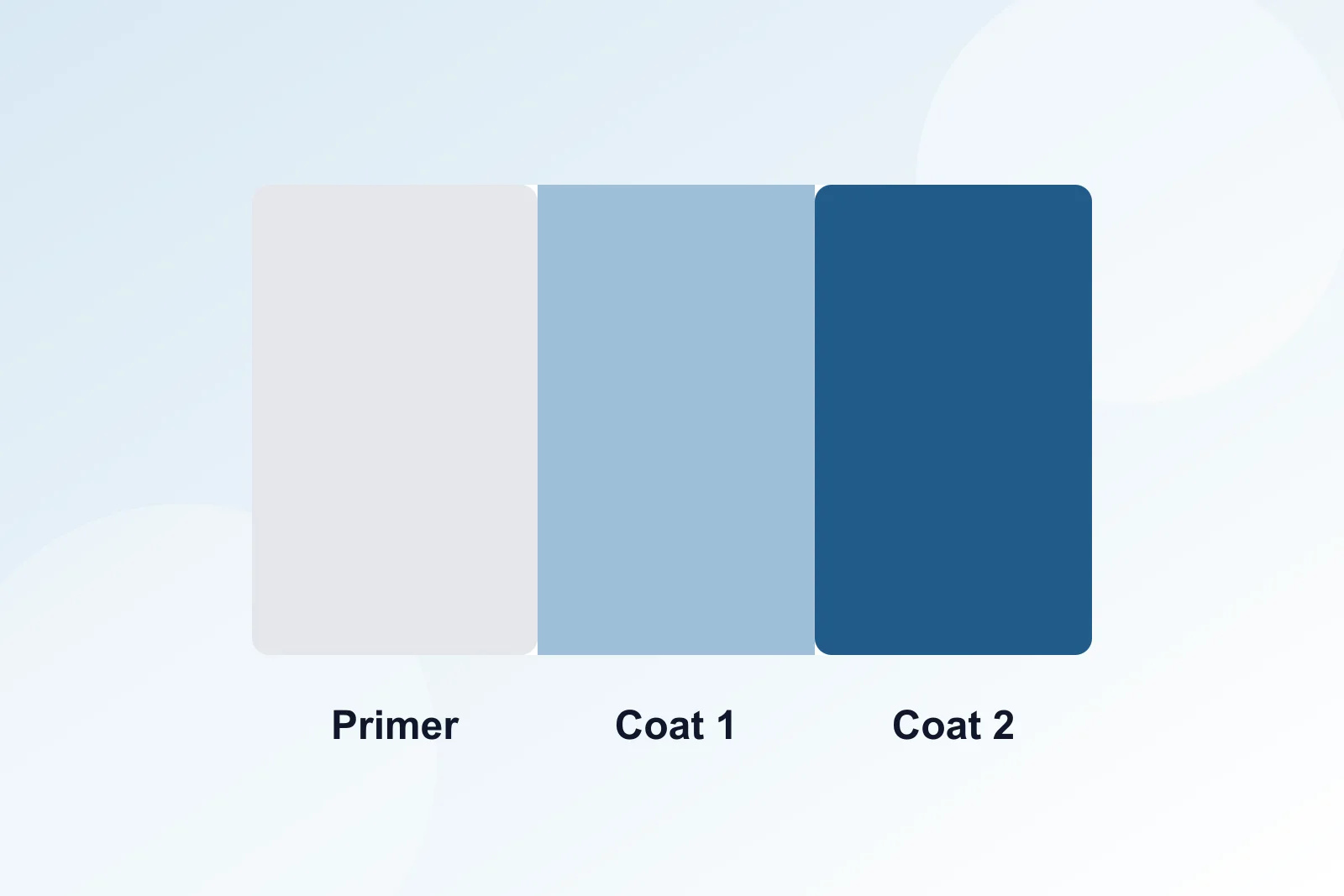
The standard: two coats
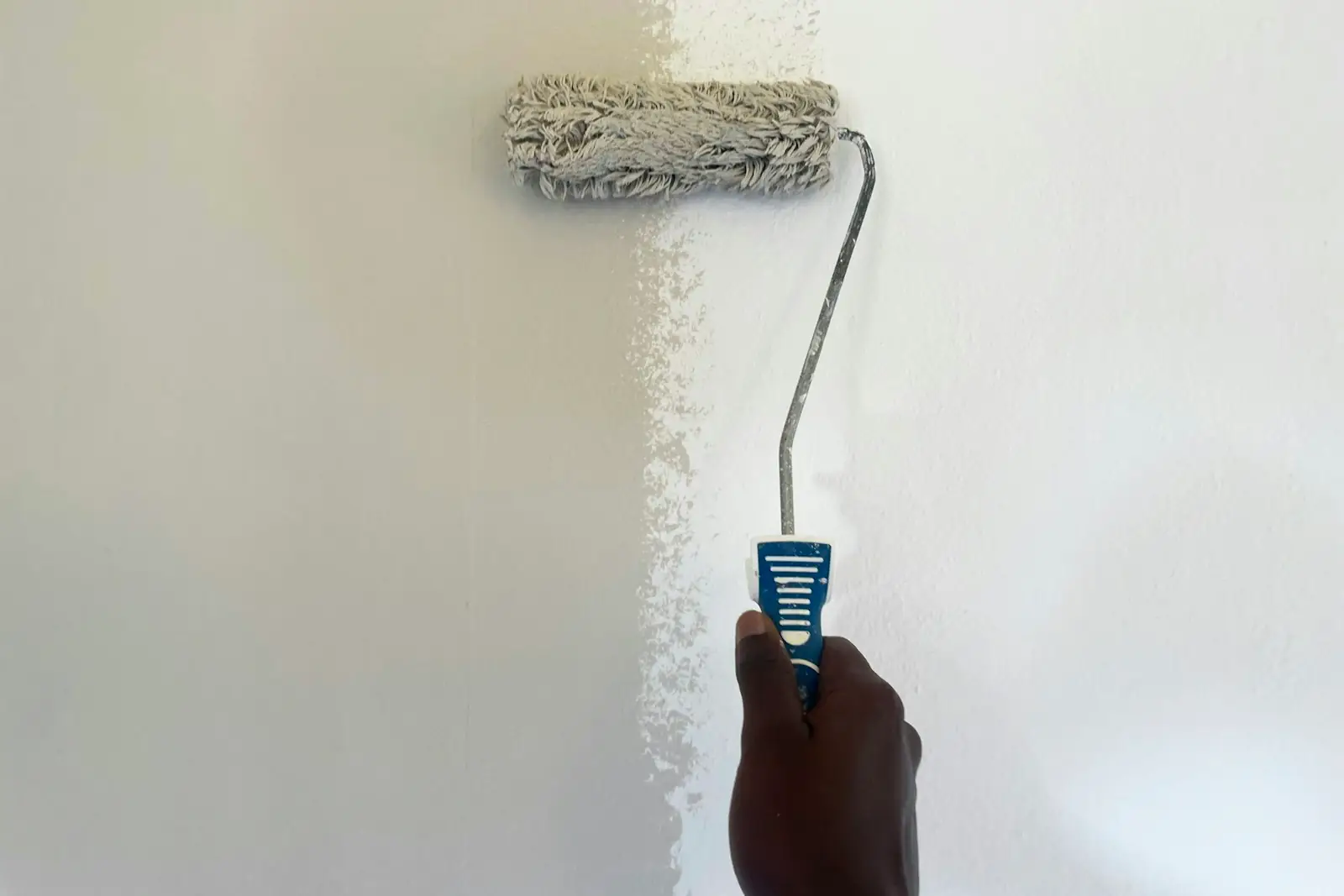
For most walls and ceilings, two coats of emulsion is the norm. One coat rarely gives even coverage, especially on repainted walls where slight colour differences, patches of filler and areas of different porosity can show through. The second coat evens everything out and builds a durable film.
| Surface | Typical coats |
|---|---|
| Walls, similar colour | 2 |
| Walls, major colour change | 2 – 3, sometimes with primer |
| Ceilings | 2 |
| New plaster | Mist coat + 2 |
| Woodwork, previously painted | 1 – 2 (plus undercoat if needed) |
| Bare timber | Primer + undercoat + 1 – 2 top coats |
| Exterior masonry | 2 |
Typical number of coats by surface
When one coat might be enough
If the walls are in good condition and you're repainting in the same colour, a single coat can sometimes be enough – particularly with a high-quality paint. Some decorators offer a one-coat refresh for landlords or quick jobs. But it's unusual for a professional to recommend one coat as standard.
When extra coats are needed
These situations often need an extra coat or a primer:
- Going from dark to light colours
- Strong colours such as reds, yellows and deep blues
- Patches of filler or repaired plaster
- Stains that need sealing first
- Very porous surfaces
Rather leave it to a professional?
Mist coats and primers
New plaster is very porous, so it needs a mist coat – thinned emulsion – to seal it before the top coats. Bare wood needs primer, and many surfaces benefit from undercoat. These don't count as 'top coats', but they're essential for a lasting finish.
See our guides to painting new plaster and painting woodwork.