Why you can't paint straight away
New plaster is full of water. Until it has dried out, paint can trap that moisture, leading to blistering, peeling and patchy colour. You'll know it's still drying because the plaster looks darker in patches; as it dries it turns an even, pale pink.
How long that takes depends on the thickness of the plaster, the time of year and the ventilation. A thin skim in a warm, airy room might be ready in a week or two. A full replaster in a cold, damp winter can take considerably longer. Patience here is cheaper than a repaint.
What is a mist coat?
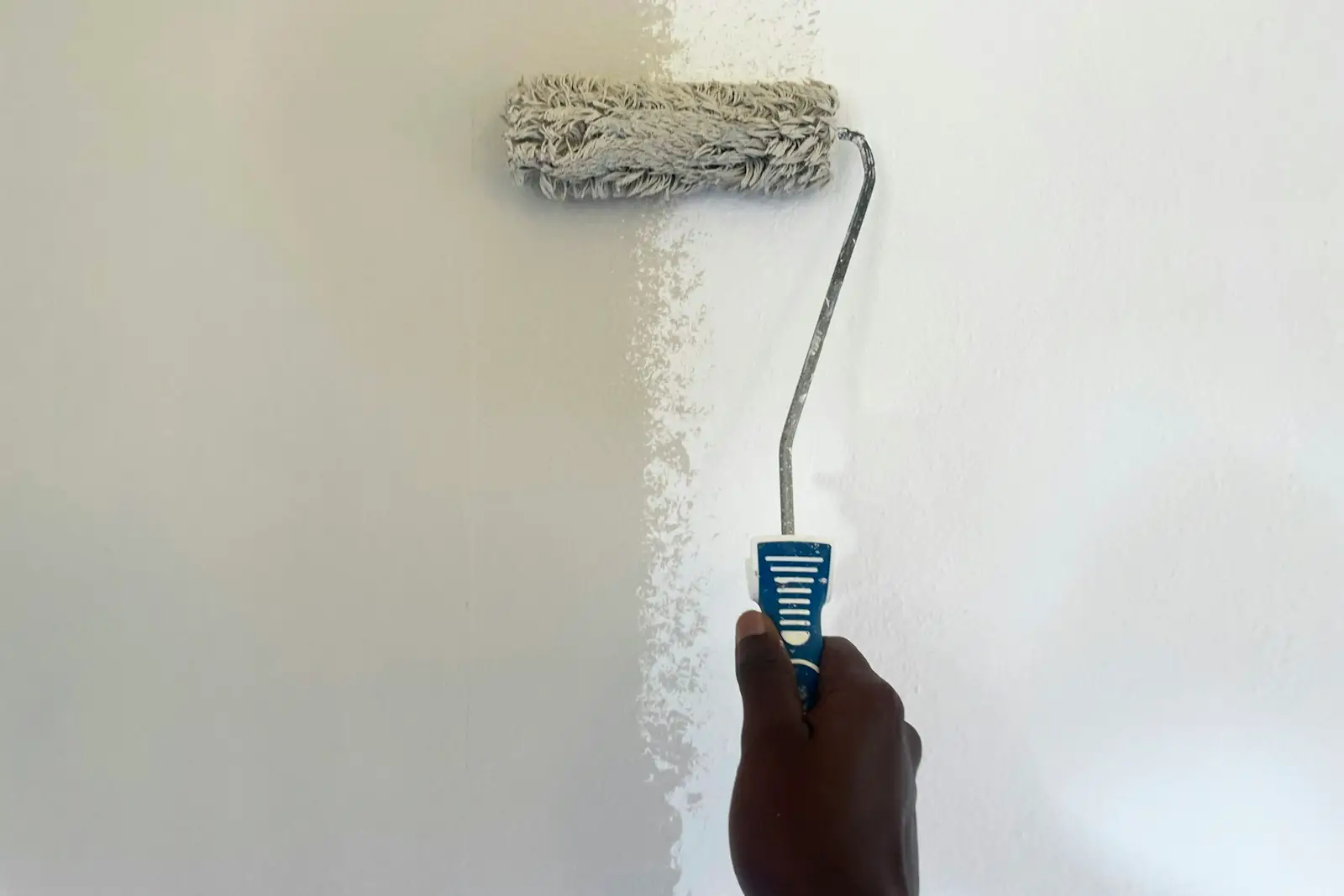
New plaster is very thirsty. If you roll full-strength emulsion onto it, the plaster sucks the water out of the paint before it can bond, and the paint can later flake off in sheets. A mist coat is the fix: a first coat of watered-down emulsion that soaks into the plaster and gives the following coats something to grip.
Decorators usually use a cheap, breathable contract matt or a dedicated plaster primer for this, thinned according to the manufacturer's guidance. Once it's dry, the walls are ready for normal coats.
Rather leave it to a professional?
Describe the job and compare free quotes from painters and decorators near you.
- Free to use
- No obligation
- Compare local painters
- Quick online form
You'll continue to our quotes partner, MyJobQuote, to describe your painting job.
Common problems and how to avoid them
Most issues with painting new plaster come from rushing or skipping the mist coat.
- Peeling in sheets – usually no mist coat, or vinyl paint used as the first coat
- Patchy finish – plaster still damp in areas, or uneven suction
- Blisters – trapped moisture
- Visible trowel marks or nibs – a light sand before painting helps
What a decorator will do
A decorator will check that the plaster has dried, lightly sand any nibs, dust down, apply the mist coat and then two finish coats. Expect it to take an extra visit compared with painting a previously painted wall, because each coat needs drying time.