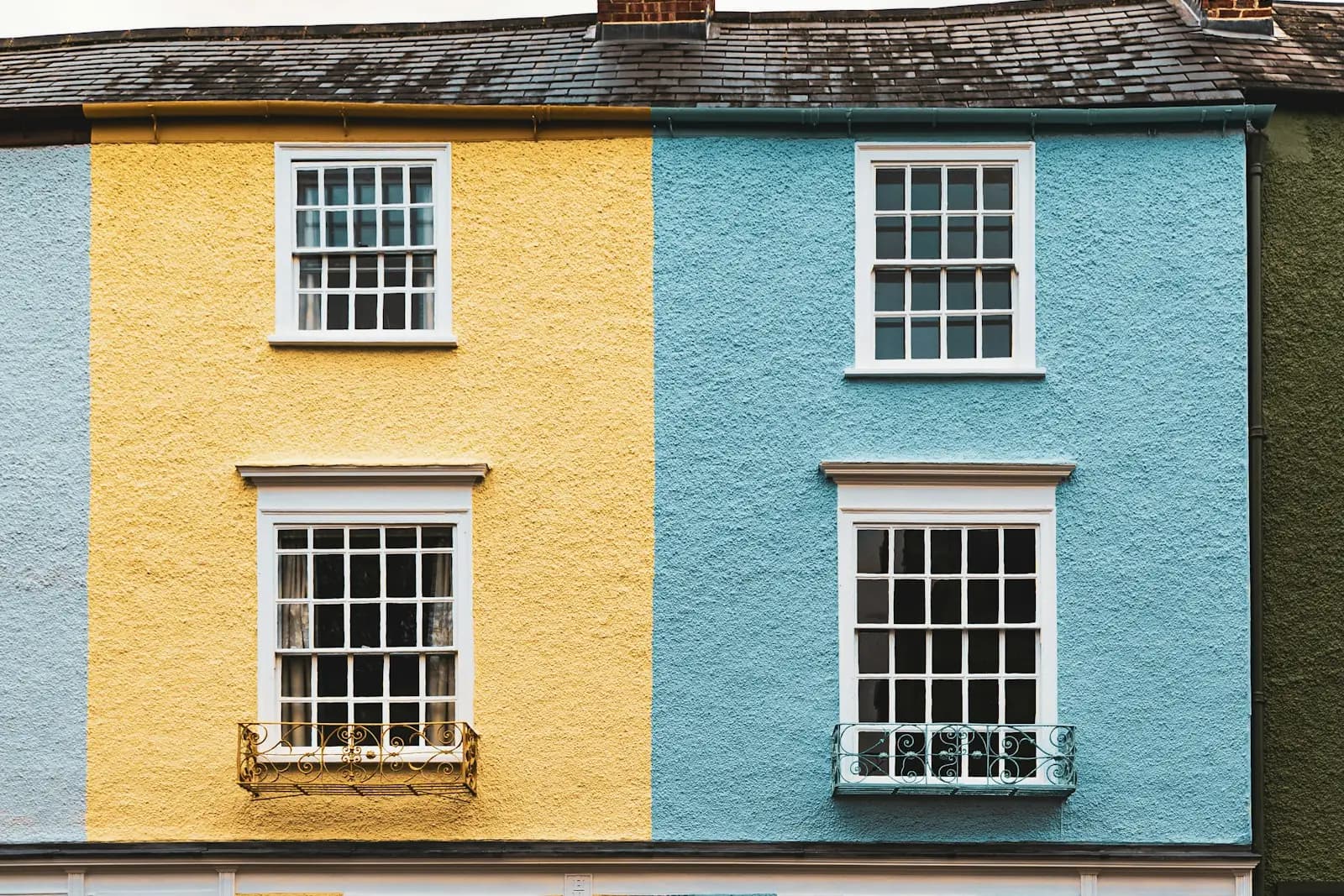
The short answer
For a bungalow, a garden wall or the ground floor of a house, you almost certainly don't need scaffolding. A good set of ladders and steps will do the job. For a full repaint of a two-storey house – walls, windows, fascias and all – most painters will want either a mobile tower or a proper scaffold, and on three-storey Victorian and Edwardian terraces, scaffolding is pretty much a given.
It isn't really about whether a painter can physically reach the top of the wall. It's about whether they can work up there safely, for days at a time, and do the preparation properly rather than leaning out sideways with a scraper in one hand.
When ladders are enough
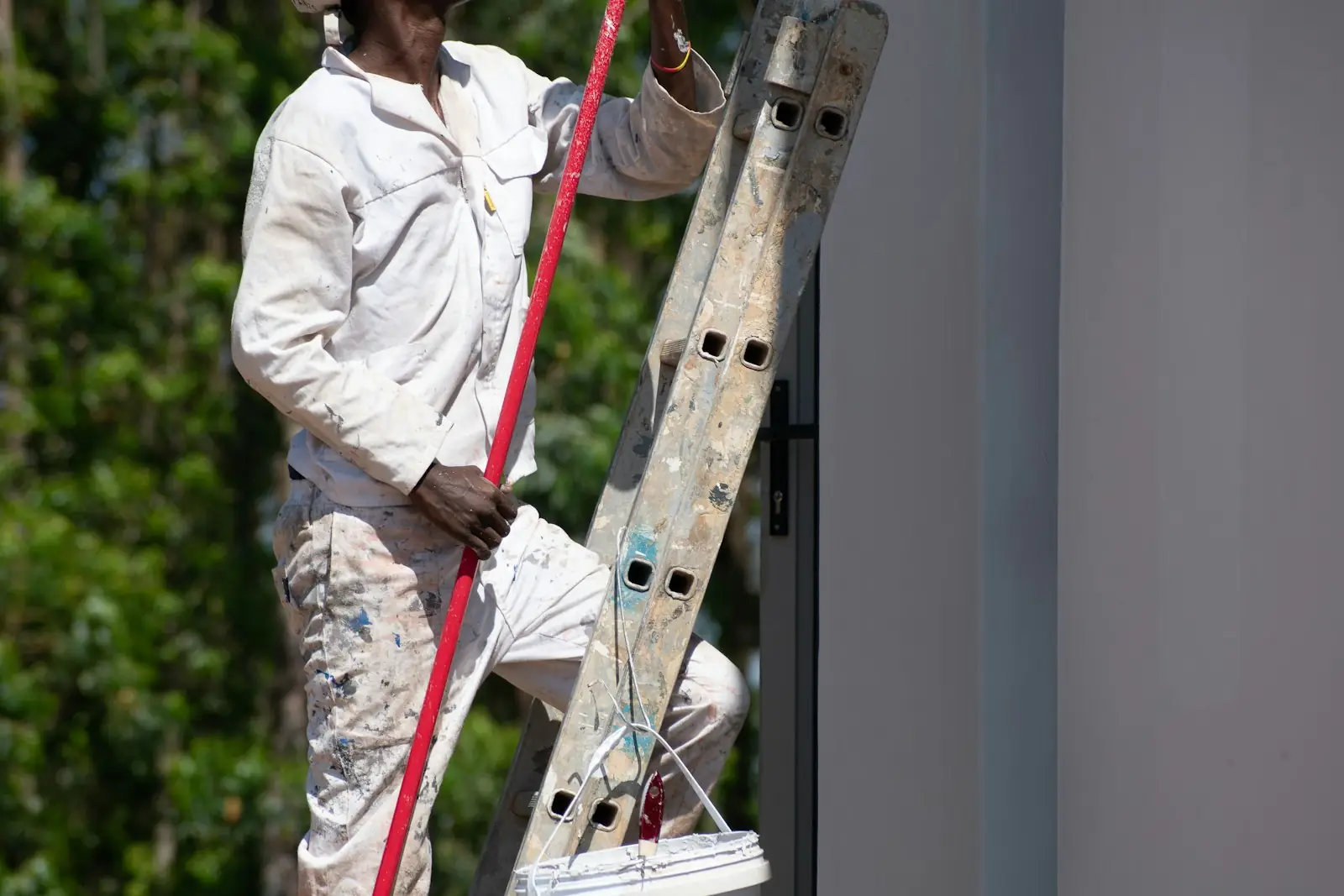
Ladders are fine for short, light jobs where the painter can keep three points of contact and doesn't have to stretch. Health and Safety Executive guidance treats them as suitable for brief tasks, not for hours of continuous work at height. In practice, that means jobs like these:
- Painting a front door, porch or ground-floor window frames
- Touching up a few patches of render or a single sill
- Bungalows and single-storey extensions
- Fascias and gutters on a low house where the ground is flat and firm
- Garden walls, outbuildings and sheds
When a scaffold tower makes more sense
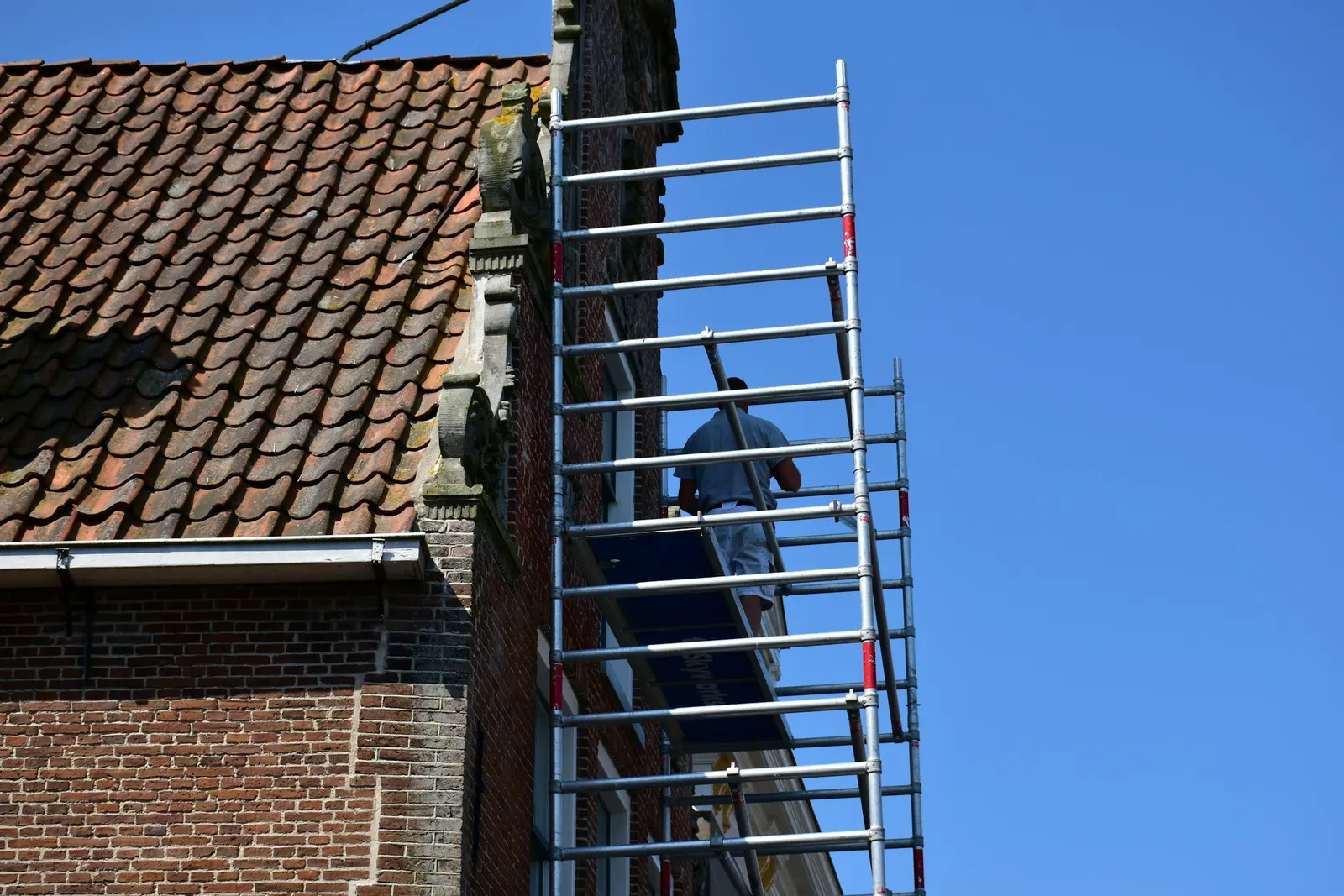
A mobile tower sits in the middle ground. It gives the painter a stable platform with guardrails, it can be wheeled along an elevation as the work progresses, and it's far cheaper than a full scaffold for a short job. Plenty of painters own their own towers and simply include them in the price.
Towers need firm, level ground, though, and they don't cope well with steep gardens, conservatories, bay windows or narrow side passages. They also only reach one section at a time, so on a big house the painter spends a lot of time moving and rebuilding. If you're weighing up the two, this guide to choosing between a scaffold tower and full scaffolding explains the differences clearly.
When full scaffolding is worth it
Full scaffolding comes into its own on taller houses and on jobs with a lot of preparation. With a fixed platform running the length of the wall, the painter can wash down, scrape, fill, prime and paint at a sensible pace, and the finish is usually better for it. It's also the obvious choice when other trades need to get up there too – a roofer to replace slipped tiles, say, or someone to repoint the chimney while the access is in place.
- Three-storey houses and tall period terraces
- Stucco fronts with cornices, mouldings and parapets
- Render that needs cracks cut out and repaired before painting
- Lots of timber windows, bargeboards or soffits at height
- Sloping sites where the back of the house is much taller than the front
- Jobs combined with roof, gutter or chimney repairs
Rather leave it to a professional?
Describe the job and compare free quotes from painters and decorators near you.
- Free to use
- No obligation
- Compare local painters
- Quick online form
You'll continue to our quotes partner, MyJobQuote, to describe your painting job.
What does scaffolding add to the cost?
This is the bit that surprises people. For a typical two-storey semi, scaffolding for the whole house can easily add £800 to £2,000 to the job, and sometimes more for detached houses, three-storey terraces or awkward sites. A single elevation costs less. Prices usually cover erecting, a set hire period (often several weeks) and dismantling, with a weekly charge if the job overruns.
Some painters arrange the scaffold themselves and add it to their quote; others ask you to book it directly. Either is fine, as long as you know which. If you'd rather sort it yourself, firms offering domestic scaffolding for homes can quote separately, and it's worth getting that price before you compare painting quotes so you're comparing like with like.
| Access | Best suited to | Typical cost |
|---|---|---|
| Ladders and steps | Bungalows, ground-floor work, small repairs | Usually included in the painter's price |
| Mobile scaffold tower | Two-storey houses with firm, level ground | Often included, or a modest hire charge |
| Full scaffolding | Tall houses, big repaints, lots of preparation | Roughly £800–£2,000 for a two-storey semi |
| Cherry picker | Tall, single features or where scaffold can't go | Charged by the day |
Rough guide to access options for exterior painting (indicative only – every house is different)
Licences, neighbours and security
If the scaffold has to stand on the pavement or road, the scaffolding firm will normally need a licence from the council, and some councils also ask for lighting or hoarding. Apply early, because it can take a couple of weeks. On terraces and semis you may also need your neighbour's permission if the scaffold crosses onto their side – a friendly chat before the lorry turns up goes a long way.
Scaffolding should be inspected by a competent person after it's put up and then at least every seven days while it's in use, and most firms hang a tag on it to show when it was last checked. It's also worth thinking about security: a scaffold makes upstairs windows easy to reach, so lock them, and ask whether the firm can fit an alarm or remove the bottom ladders at the end of each day.
Questions to ask your painter about access
Access is one of the main reasons exterior painting quotes differ so much, so it pays to pin it down before you agree to anything:
- What access will you use for each part of the house?
- Is scaffolding included in the price, or do I need to arrange it?
- How long will it need to stay up, and what happens if the weather delays the job?
- Who is applying for any council licence?
- Are you insured for work at height, including from a scaffold or tower?
- Would it make sense to do gutters or roof repairs while the access is there?