What masonry paint is for
Masonry paint is designed for outside walls: render, pebble-dash, roughcast, painted brick and concrete. It needs to keep rain out, let moisture from inside the wall escape, stretch and shrink with temperature changes and resist mould and algae. That's a lot to ask of a coat of paint.
Most masonry paints sold in the UK are water-based and come in a range of colours, though white, cream and soft neutrals are still the most popular for houses.
Smooth or textured?
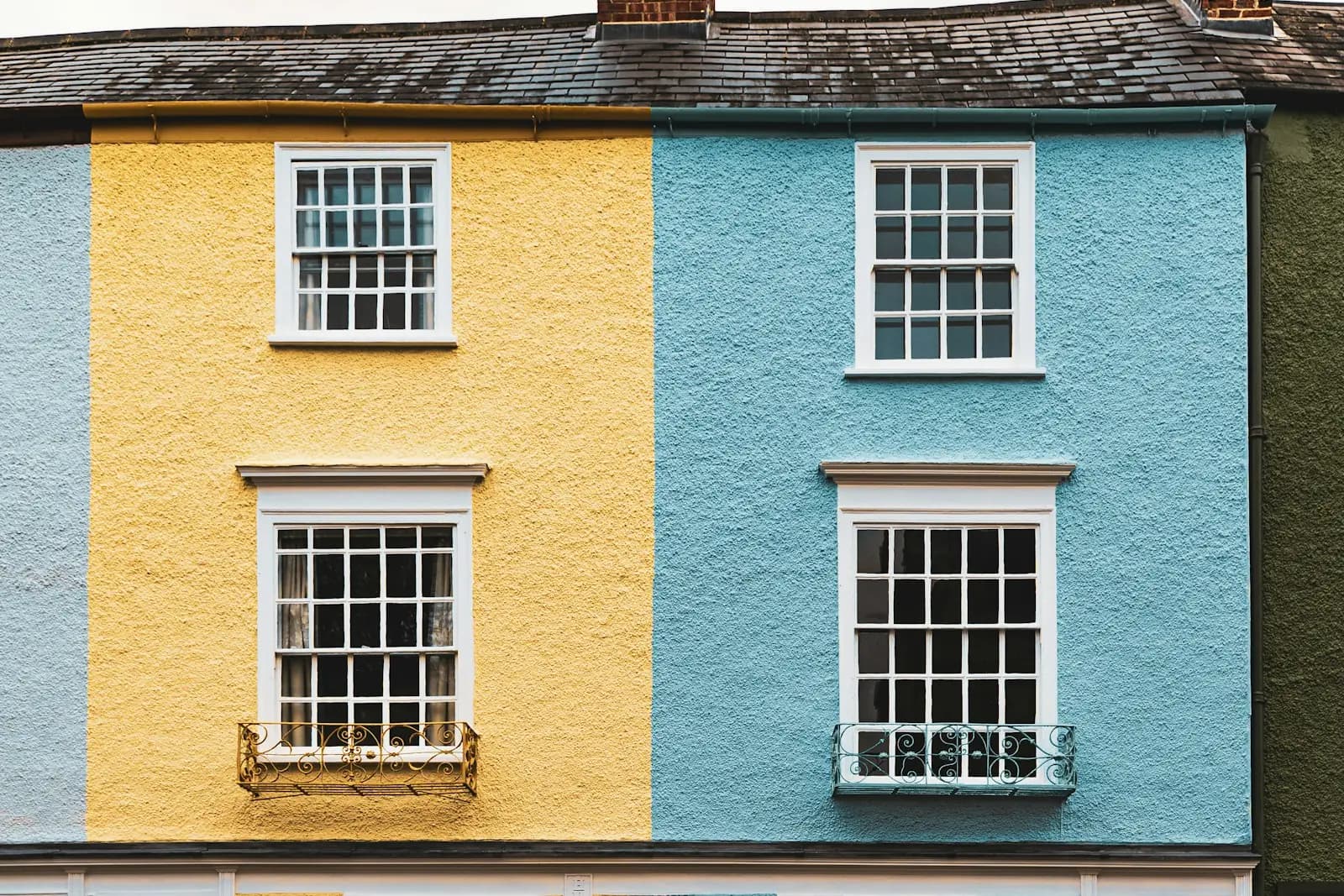
Smooth masonry paint gives a clean, flat finish and is the usual choice for rendered houses in good condition. Textured masonry paint contains fine particles that give a slightly gritty surface. It's handy for hiding hairline cracks and patched repairs, but it's harder to clean and harder to change later.
On pebble-dash, a smooth masonry paint is usually fine – the texture comes from the wall itself.
Preparation makes or breaks the job
Most exterior paint failures come down to poor preparation. Before any masonry paint goes on, the wall should be:
- Cleaned of dirt, cobwebs and loose material
- Treated with a fungicidal wash if there's green or black growth
- Scraped back where old paint is flaking
- Repaired where render is cracked or sounds hollow when tapped
- Sealed with a stabilising solution if the surface is chalky or powdery
- Completely dry
Rather leave it to a professional?
Describe the job and compare free quotes from painters and decorators near you.
- Free to use
- No obligation
- Compare local painters
- Quick online form
You'll continue to our quotes partner, MyJobQuote, to describe your painting job.
Coats, coverage and colour
Two coats are standard. Pebble-dash and roughcast drink a lot more paint than smooth render – sometimes twice as much – which is one reason quotes for textured houses are higher. Strong colours may need a third coat for an even result.
Colour choice is usually yours, but check first if your home is listed, in a conservation area or covered by an Article 4 direction, where changing the colour of the front may need consent.
When not to use standard masonry paint
Older buildings with lime render or soft, historic brick and stone often need to 'breathe' more than modern masonry paint allows. Trapping moisture in these walls can lead to damp inside and damaged render outside. Mineral paints and limewash are usually better choices – see our guide to breathable paints for old homes.
And if your brick or stone has never been painted, think hard before starting. It can be very difficult and costly to reverse.