The short answer
Ask three painters to price the outside of a typical three-bed semi and you'll probably get three numbers somewhere between £1,800 and £3,500. A detached three-bed, a house with lots of timber windows or one that needs proper scaffolding can push the total to £4,000–£5,000, and occasionally beyond.
That sounds like a wide range, and it is. The good news is that the reasons behind it are fairly predictable. Once you know what a painter is actually pricing – and what they're worried about when they stand on your drive with a clipboard – the quotes you get back start to make much more sense.
| House type | Walls only | Walls, woodwork and fascias |
|---|---|---|
| Mid-terrace | £900 – £1,600 | £1,500 – £2,600 |
| Semi-detached | £1,300 – £2,200 | £1,800 – £3,500 |
| Detached | £1,800 – £3,000 | £2,600 – £4,800 |
| Scaffolding (if needed) | £800 – £2,000 extra | £800 – £2,000 extra |
Indicative prices to paint the exterior of a 3-bedroom house (2026, including labour and materials)
What's normally included in the price
A proper exterior quote covers far more than rolling paint onto the walls. On a typical three-bed, the painter will usually be pricing for some or all of the following, and it's worth checking each one is listed on your quote rather than assumed:
- Washing down the walls, often with a fungicidal wash to kill algae and lichen
- Scraping off loose and flaking paint, then sanding the edges back
- Filling small cracks in render and making good around pipes and fittings
- Priming bare patches and stabilising chalky surfaces
- Two coats of masonry paint on the walls
- Preparing and painting fascias, soffits and bargeboards
- Window frames, sills, the front door and any timber cladding
- Masking windows, doors, paths and plants, and clearing up afterwards
Why two quotes for the same house can be so different
The biggest single factor is the surface. Smooth, sound render that was painted eight years ago is a pleasant two- or three-day job for a pair of painters. Pebble-dash or roughcast soaks up paint, takes far longer to cut in and might use double the materials. Bare brick that's never been painted needs a serious conversation before anyone opens a tin, because once it's painted, you're committed to repainting it for life.
Next comes the condition. If there are blown patches of render, rotten sills, or years of flaking paint on the windows, the painter has to fix that first – and good preparation is where most of the time on an exterior job goes. A cheap quote that skips the prep will look fine for a summer, then start peeling.
Then there's access. A three-bed semi with a flat drive and a tidy side return is straightforward. Add a conservatory, a steep garden at the back or a single-storey extension in the way, and the painter has to think much harder about how to reach the upper walls safely.
Do you need scaffolding for a 3-bed house?
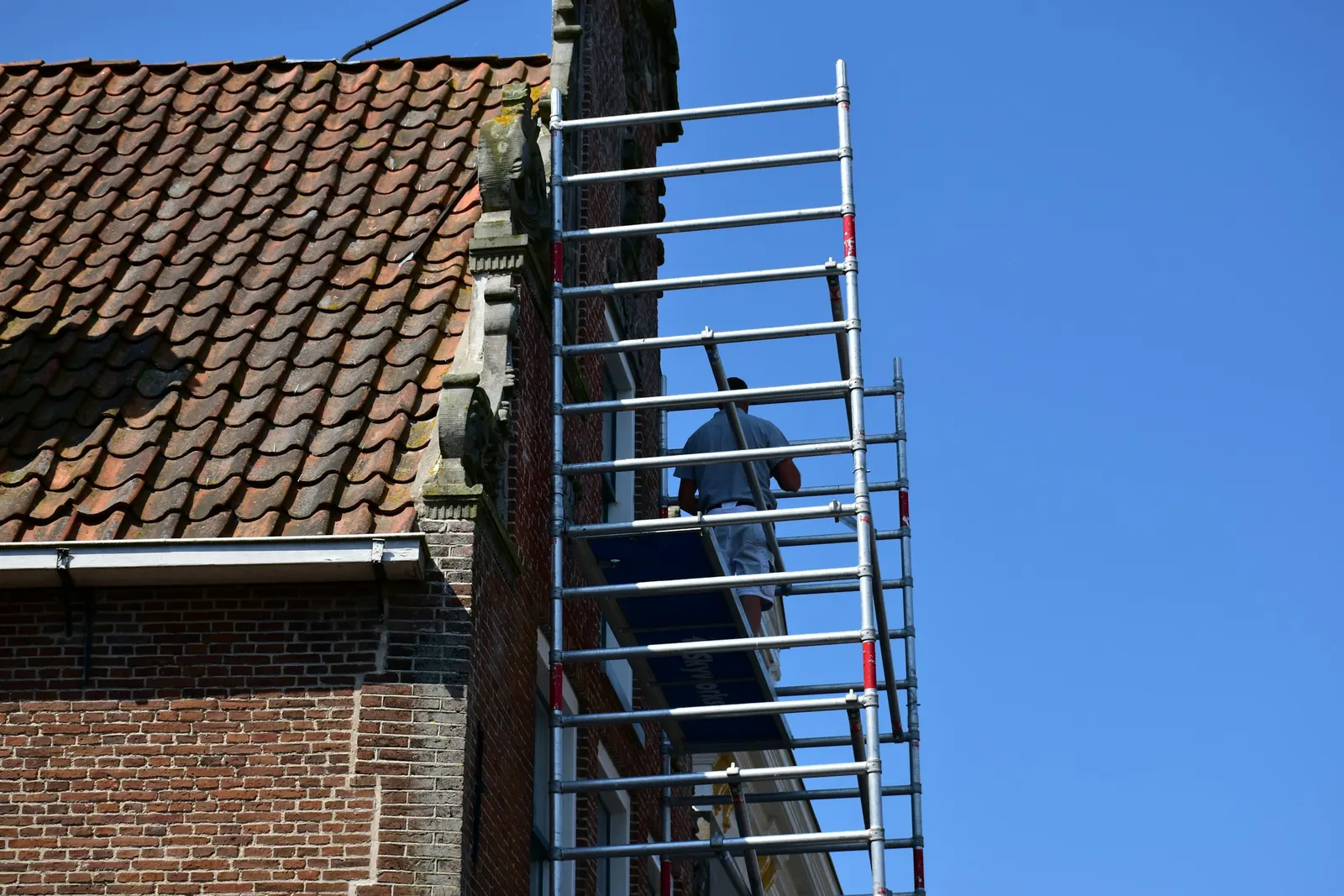
Many painters will do a two-storey semi from ladders and a mobile tower, especially if the walls are in decent condition and the ground is level. That keeps the cost down. If the house needs a lot of preparation up high, has three storeys at the back, or other work is planned at roof level, full scaffolding becomes the sensible option.
For a typical three-bed semi, scaffolding round the whole house tends to add £800–£2,000, depending on your area and how long it stays up. Our guide to whether you need scaffolding to paint a house explains how painters decide, and you can compare independent domestic scaffolding quotes if you'd rather book it yourself.
Rather leave it to a professional?
Labour, materials and how long it takes
On most exterior jobs, labour is roughly 75–85% of the bill. Painters typically charge between £180 and £280 a day per person outside London, and £250–£350 in London and parts of the South East. A three-bed semi in good condition usually takes two painters four to seven working days, weather permitting.
Materials are a smaller slice than people expect. A good-quality masonry paint costs around £45–£80 for 10 litres, and a three-bed house might need 40–60 litres for two coats on smooth render – more on pebble-dash. Exterior gloss or satin for the woodwork, primers, fillers, caulk and fungicidal wash add a couple of hundred pounds more.
Regional differences
Where you live makes a noticeable difference. London and the Home Counties are typically 20–30% above the national average, partly because of day rates and partly because parking, congestion charges and permits all add up. Prices in the North of England, Wales, Scotland and Northern Ireland are generally lower, although good painters everywhere are booked up from spring onwards.
Our painter and decorator cost guide has typical day rates by region, which is a useful sanity check when the quotes land.
How to keep the cost down without cutting corners
There are honest ways to reduce an exterior quote, and some false economies. The honest ones mostly come down to making the job easier and more predictable for the painter:
- Book outside the busy season – early spring or September can be more flexible on price
- Clear the ground around the house: bins, pots, trellis and furniture
- Cut back climbers and shrubs before the painter arrives
- Get roofing, gutter or render repairs done in the same window, so access is shared
- Stick with a similar colour – going from dark to light can add a coat
- Ask for the walls and woodwork to be priced separately, so you can phase the work if needed
Getting quotes you can actually compare
Ask each painter to break the quote into walls, woodwork and access, and to say which products they'll use and how many coats. That way you can see whether a cheaper quote is genuinely better value, or just quietly leaving something out. Our guide on how to choose a painter and decorator has a checklist of what to ask, and you can request free quotes from local exterior painters in a couple of minutes.