Typical costs
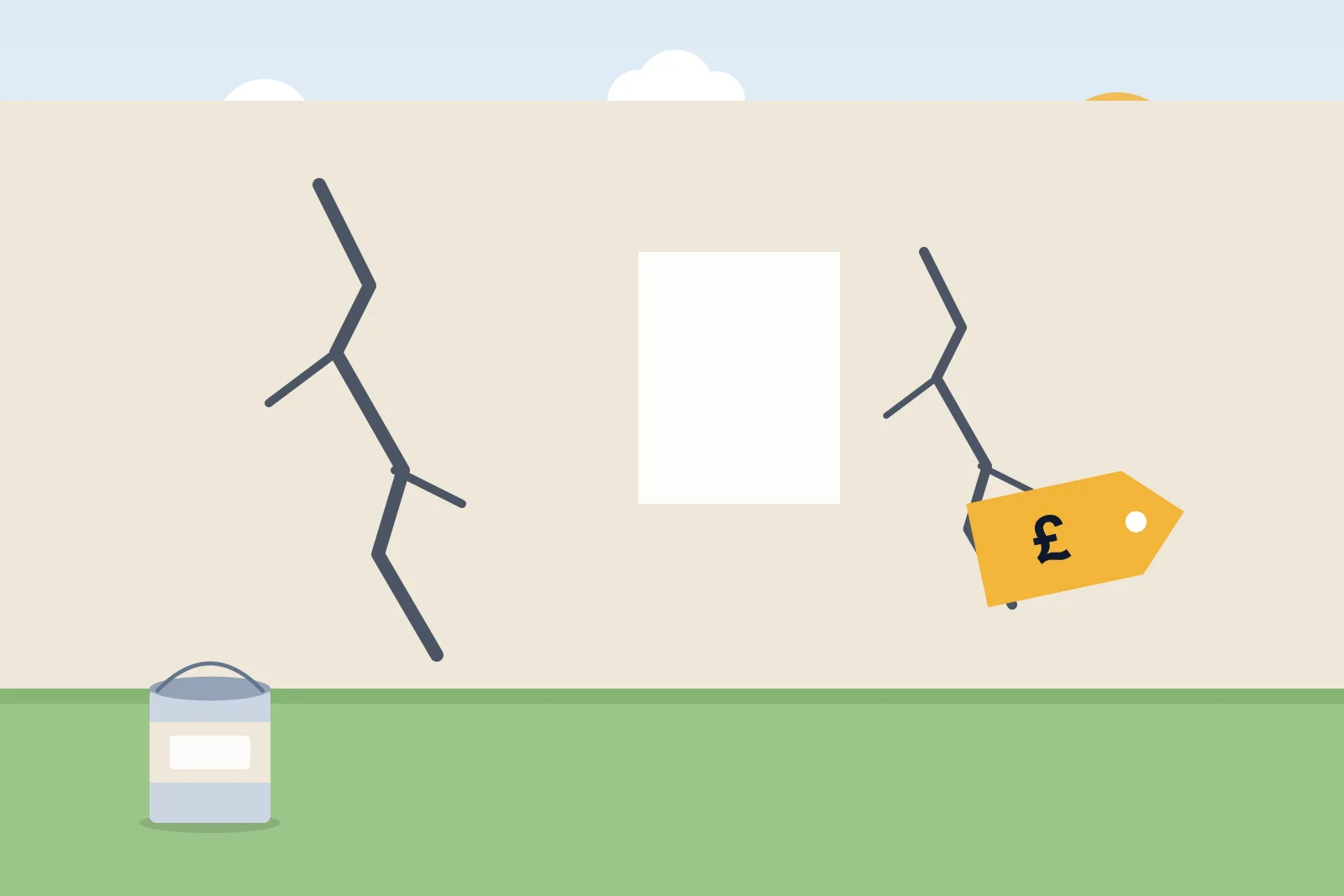
The cost depends almost entirely on how much render needs repairing. Filling a handful of hairline cracks before a repaint might add only £100–£300 to an exterior painting quote. Cutting out and patching blown sections is more like £40–£80 per square metre. Re-rendering a whole elevation is a plastering job rather than a painting one, and can run into thousands.
| Work | Typical cost |
|---|---|
| Filling hairline cracks (whole house) | £100 – £400 |
| Raking out and filling larger cracks | £10 – £25 per metre |
| Patch repairs to blown render | £40 – £80 per m² |
| Re-rendering one elevation | £1,500 – £4,000 |
| Painting a semi after repairs (walls only) | £1,300 – £2,200 |
Indicative costs for render repairs and painting (2026)
Hairline cracks vs structural cracks
Most render develops fine cracks over time as it shrinks, expands and contracts with the weather. Cracks narrower than about 1mm are usually cosmetic and can be filled with a flexible exterior filler before painting. A good masonry paint will bridge very fine cracks on its own.
Wider cracks, stepped cracks following the brick joints underneath, cracks wider at the top than the bottom, or cracks that reappear after filling may indicate movement in the wall itself. Those need investigating – sometimes by a structural engineer – before anyone paints over them.
What causes render to crack
Understanding the cause matters, because a repair without fixing the cause will simply crack again.
- Water getting in behind the render through failed gutters, sills or cracks, then freezing
- Render that's too hard or strong for the wall behind it, especially on older houses
- Natural movement and shrinkage, particularly around windows and doors
- Non-breathable paints trapping moisture
- Subsidence or structural movement, which is rare but serious
Rather leave it to a professional?
How a good repair is done
For small cracks, the painter will rake out loose material, brush it clean, apply a stabilising primer and fill with a flexible exterior filler. For larger cracks and blown patches, the damaged render is cut back to sound edges, the wall underneath is prepared, and new render is applied in layers to match the surrounding thickness and texture.
Matching texture is where the skill lies – a smooth patch on a roughcast wall will always show. Once the repairs have dried and cured, the whole wall is painted, ideally with a paint suitable for the render type. Our guide to the best exterior paint for rendered walls explains the options.
Painter or plasterer?
Many exterior painters are happy to fill cracks and do small patch repairs as part of their preparation. For larger areas of blown render, a plasterer or rendering specialist is better. Some painting firms work alongside plasterers so that the repair and paint are done in the same visit, which saves on access costs.
Planning the job
Render repairs need time to cure before painting – sometimes several days for patches and longer for new render. That means the repair and paint are often done in two stages, so allow for this when booking scaffolding. Repairs and painting also need dry, frost-free weather.
When you get quotes, ask each contractor how they'll deal with cracks, how they'll match texture and what paint they'll use. Compare quotes from local exterior painters, and check our guide to exterior painting costs for a 3-bed house for the wider budget.