Typical prices
Most painters price fences per metre run or per panel, assuming a standard 6ft (1.8m) height. For a typical garden with 20–30 metres of fence on both sides, expect to pay roughly £250–£700 for one side, depending on the condition and product.
| Job | Typical cost |
|---|---|
| Per 6ft panel (one side) | £12 – £25 |
| Per metre run (one side) | £8 – £15 |
| Small garden, 15m of fence | £180 – £350 |
| Medium garden, 25m of fence | £250 – £550 |
| Large garden, 40m of fence | £400 – £850 |
| Both sides | Roughly double, if access allows |
Indicative costs for professional fence painting (2026, one side, two coats)
What affects the price
Fence painting is mostly about time on site. The biggest factors are:
- Fence type – rough-sawn overlap boards soak up paint, while smooth slatted fences go quicker
- Condition – old fences may need cleaning, mould treatment and broken boards fixed
- Access – shrubs, climbers, sheds and greenhouses all slow things down
- Colour change – going from dark brown to sage green usually needs extra coats
- Product – premium fence paints and oils cost more but last longer
- Spraying vs brushing – spraying is faster but needs more masking
Fence paint, stain or oil?
Water-based fence paints are the most common choice. They're quick, come in lots of colours and are fine for rough-sawn timber. Wood stains and oils soak in rather than forming a film, which can look more natural on smooth timber and doesn't peel, but they may need recoating more often.
If your fence is new pressure-treated timber, check the manufacturer's advice – some recommend waiting a few months before painting so the treatment can settle.
Rather leave it to a professional?
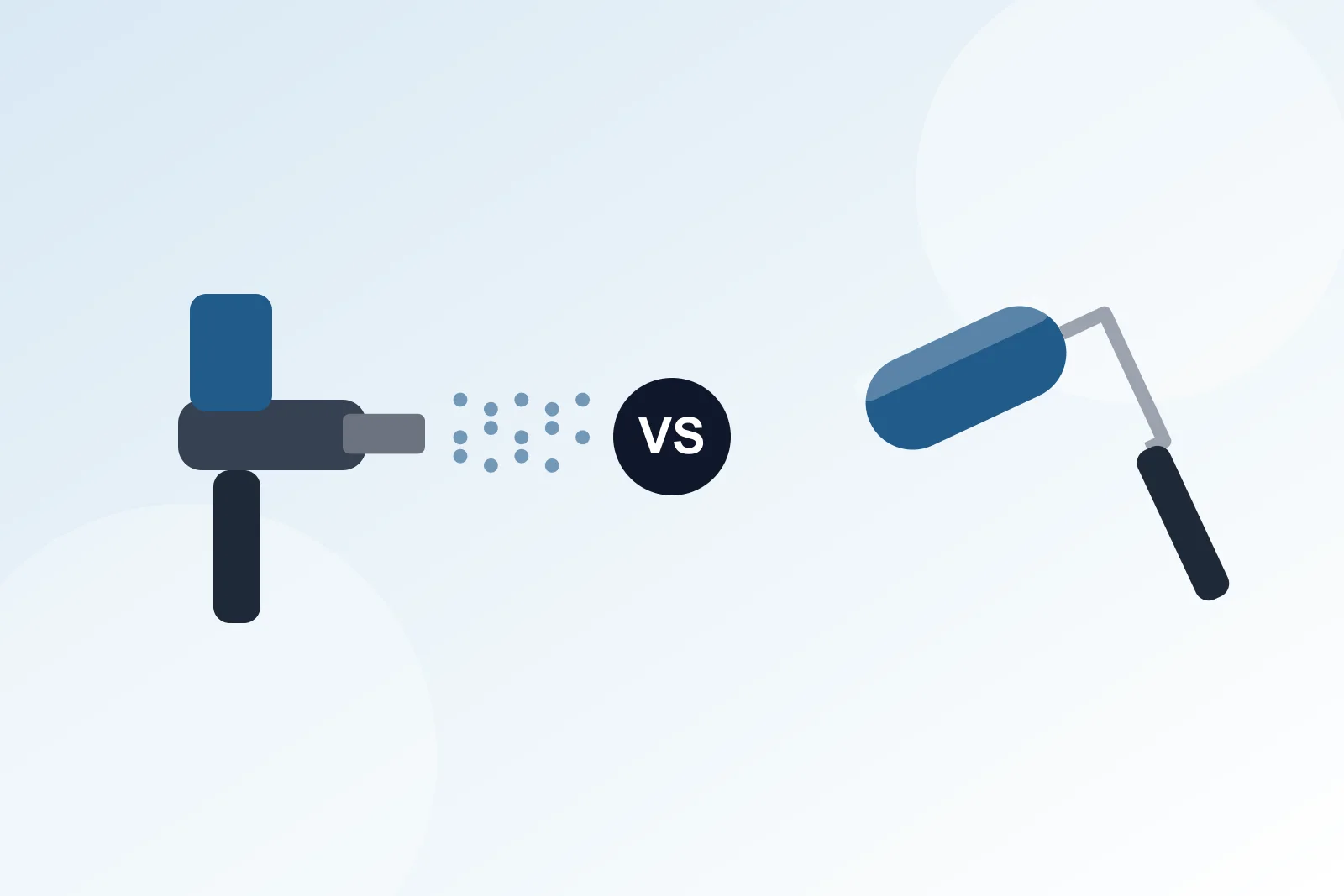
Spraying vs brushing a fence
A fence sprayer is much quicker on rough panels, and many painters use one. The downside is overspray: on a windy day, paint can drift onto plants, paving, cars and your neighbour's side. A careful painter will mask plants and choose a calm day, or brush the areas close to sensitive surfaces.
Your neighbour's side
Painting your side of a shared fence is generally fine. Painting the neighbour's side needs their permission, and if the fence belongs to them, you shouldn't paint it at all without asking. It's a good idea to talk to them before the painter arrives – especially if overspray could reach their garden.
If your fence is rotten, leaning or missing boards, it may make more sense to repair or replace it before paying for paint. When it's sound and ready, get quotes from local exterior painters.
How often should a fence be painted?
Most fence paints need refreshing every two to five years, depending on the product and how much sun and rain the fence gets. Fences in shade or near trees may develop algae more quickly. Regular recoating protects the timber and makes the fence last longer – a cheap way to delay replacing it.