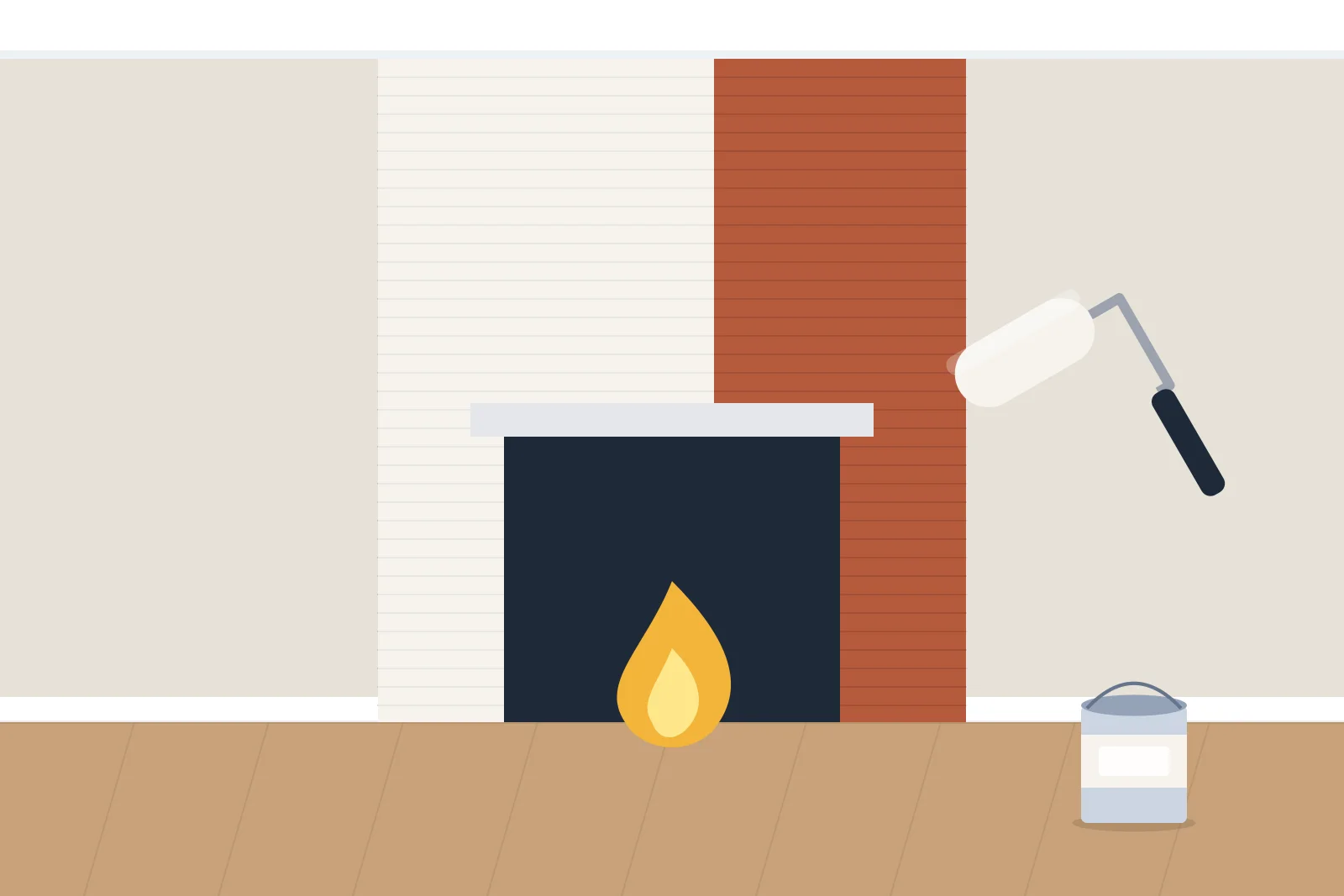
Should you paint interior brick?
Painting brick is hard to reverse. Stripping paint from brick is messy, slow and rarely gets every trace out of the mortar joints. If the brick is attractive, consider cleaning and sealing it instead. If it's patchy, sooty, mismatched or dark, painting can transform the room.
Painted brick suits cottages, industrial-style kitchens, chimney breasts and feature walls. Pale colours keep the texture visible but bounce light around; dark colours make brick look modern and moody.
Preparation
Salt deposits and damp patches are a warning sign. Painting over a damp wall will cause the paint to blister. Deal with the damp first – see damp and mould before painting.
- Brush down with a stiff brush and vacuum dust and loose mortar
- Wash with sugar soap or a masonry cleaner and let it dry fully
- Clean soot from fireplaces with a dedicated soot remover
- Repoint any crumbling joints and leave to cure
- Treat efflorescence (white salty deposits) by brushing off and letting the wall dry
- Apply a stabilising primer or masonry sealer if the brick is dusty or porous
Which paint to use
Brick is porous and, in older houses, needs to breathe. A breathable mineral paint or a good masonry paint is a sensible choice on walls. Standard emulsion can work on dry, sealed brick in modern homes, but tends to look patchy on rough or porous brick. Chalk-based and lime paints give a softer, traditional look.
| Paint | Good for | Notes |
|---|---|---|
| Masonry paint (smooth) | Most brick walls | Durable and covers well |
| Mineral or silicate paint | Older homes, solid walls | Very breathable, matt finish |
| Limewash | Period homes | Soft, chalky look, needs more coats |
| Emulsion over sealer | Modern, dry brick | Easiest to recoat later |
| Heat-resistant paint | Fireplace interiors and hearths | Rated for high temperatures |
Paints for interior brick
Rather leave it to a professional?
Fireplaces need special care
The outer face of a brick fireplace surround usually only gets warm, and normal masonry paint is fine there. The firebox and areas that get very hot need a heat-resistant paint rated to the right temperature – stove paints are designed for metal, so use a high-temperature masonry product for brick. Never paint the inside of a fire that's in regular use with ordinary paint.
If the fireplace is still used with an open fire or a stove, allow the paint to cure fully before lighting, and follow the manufacturer's curing instructions – some need a gentle first fire to set.
Application
Brick has deep mortar joints and lots of texture, so work the first coat in with a masonry brush or a long-pile roller, then follow up with a brush to get into every joint. Two coats are normal; very porous brick may need three. Spraying gives excellent coverage quickly but requires thorough masking indoors.
Expect to use more paint than on a plaster wall – roughly 30–50% more.
Typical costs
Get quotes from local interior decorators, and see breathable paints for old homes if your house is older.
| Job | Typical cost |
|---|---|
| Brick chimney breast | £200 – £450 |
| Brick fireplace surround and hearth | £150 – £350 |
| Exposed brick feature wall (10–15m²) | £300 – £650 |
| Repointing before painting (per m²) | £40 – £80 |
Indicative costs for painting interior brick (2026)