Where tile paint works – and where it doesn't
Painted tiles work best on walls that don't get constant water and heavy wear: kitchen splashbacks away from the hob, bathroom walls outside the shower, cloakroom tiling and fireplace surrounds. They struggle inside shower enclosures, on bath surrounds where water sits, and on busy floors – though dedicated floor tile paint systems can cope with light domestic traffic.
Think of painting tiles as a medium-term refresh rather than a permanent solution. A good job can last five years or more on a wall. If you're planning a full renovation soon, it may not be worth it; if you want a fresh look on a budget, it's an excellent option.
| Area | Suitable? | Notes |
|---|---|---|
| Kitchen splashback | Yes | Use heat-resistant products behind hobs |
| Bathroom walls (outside shower) | Yes | Good ventilation matters |
| Inside a shower | Not recommended | Constant water breaks down most tile paints |
| Floor tiles, light traffic | With care | Use a floor tile system and topcoat |
| Fireplace surround | Yes | Avoid areas that get very hot |
Is tile painting suitable?
Preparation is everything
Glazed tiles are slippery, non-porous surfaces. Without the right cleaning and primer, paint will peel off in sheets. This is the stage that separates a long-lasting job from one that fails in months.
- Deep clean with a strong degreaser – kitchen tiles hold grease, bathroom tiles hold soap scum
- Remove mould from grout with a mould remover and let it dry
- Replace any cracked tiles and re-grout crumbling joints
- Lightly sand glazed tiles to dull the surface
- Wipe off dust and let everything dry completely
- Apply an adhesion primer designed for tiles and glazed surfaces
Choosing the paint
Use a paint specifically made for tiles, or an adhesion primer followed by a durable eggshell or satin. One-coat tile paints are convenient but usually still need two coats for an even finish. Floor tiles need a dedicated floor tile paint, often with a protective clear topcoat.
Satin and eggshell are easiest to wipe clean. High gloss highlights every bump in the tiles. In bathrooms, see best paint finish for bathrooms and kitchens and kitchen and bathroom paint.
Rather leave it to a professional?
What about the grout lines?
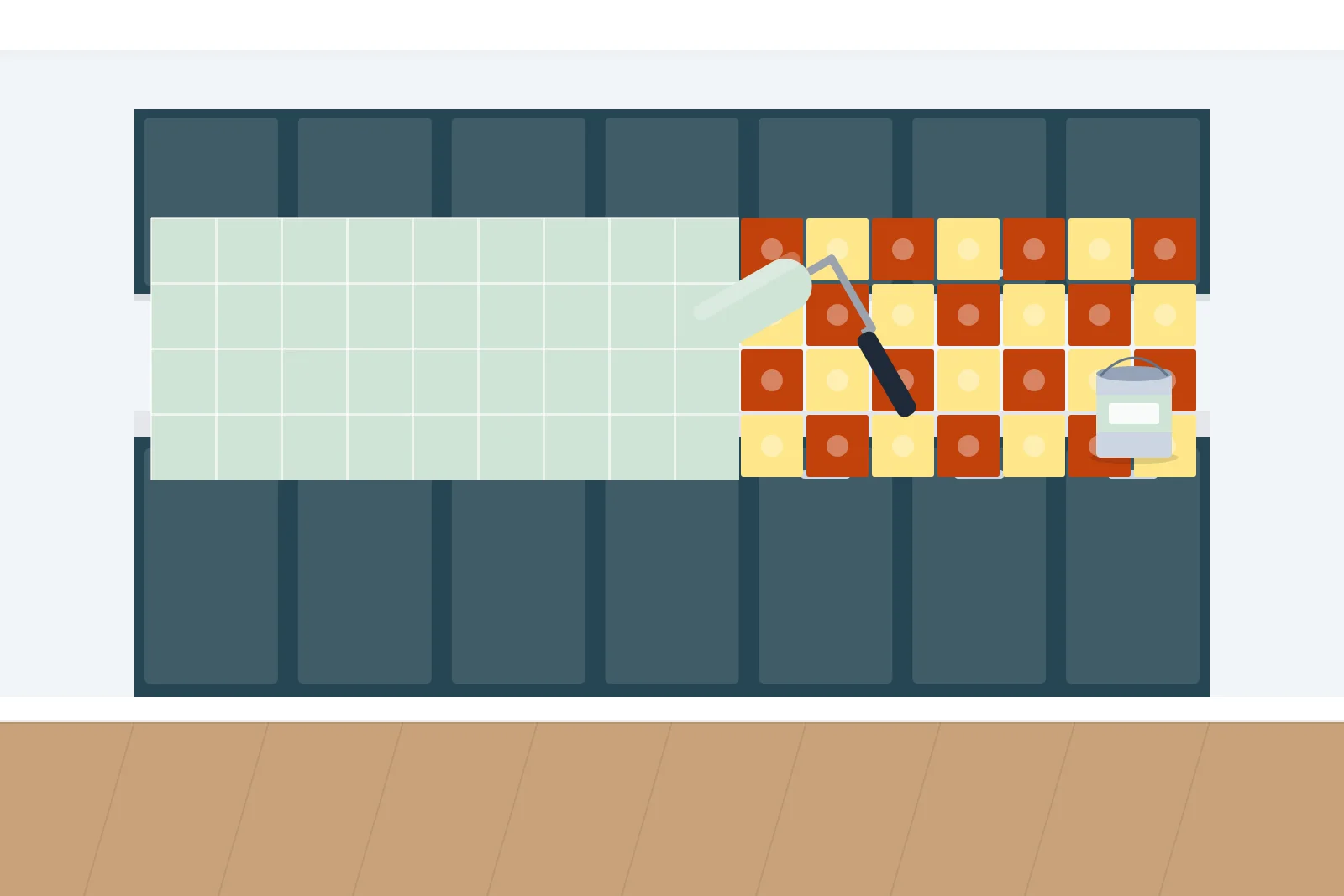
The simplest approach is to paint over tiles and grout in one colour, which gives a smooth, uniform look. Some people prefer to pick out the grout lines in a contrasting colour using a grout pen afterwards, which can make painted tiles look more like new tiling. Stencils can add patterns – a popular way to imitate encaustic floor tiles.
Costs: painting vs retiling
Painting is usually a third to half the cost of retiling, and much quicker – often a day or two rather than several days with no use of the room.
| Job | Painting tiles | Retiling |
|---|---|---|
| Kitchen splashback (3–4m²) | £150 – £350 | £400 – £900 |
| Bathroom walls, part-tiled (10m²) | £300 – £650 | £900 – £2,000 |
| Small cloakroom floor (2–3m²) | £150 – £300 | £300 – £700 |
Indicative prices (2026)
Aftercare
Let the paint cure fully before cleaning, often up to a week. Clean with mild detergent and a soft cloth – avoid abrasive cleaners. Keep rooms ventilated. Small chips can be touched up with the leftover paint. If you want a decorator to take it on, request quotes from local interior painters and decorators.